ROAS: The Complete Guide to Return on Ad Spend
Master ROAS with this complete guide. Learn the formula, good ROAS by industry, breakeven ROAS calculation, and proven strategies for improving return on ad spend.
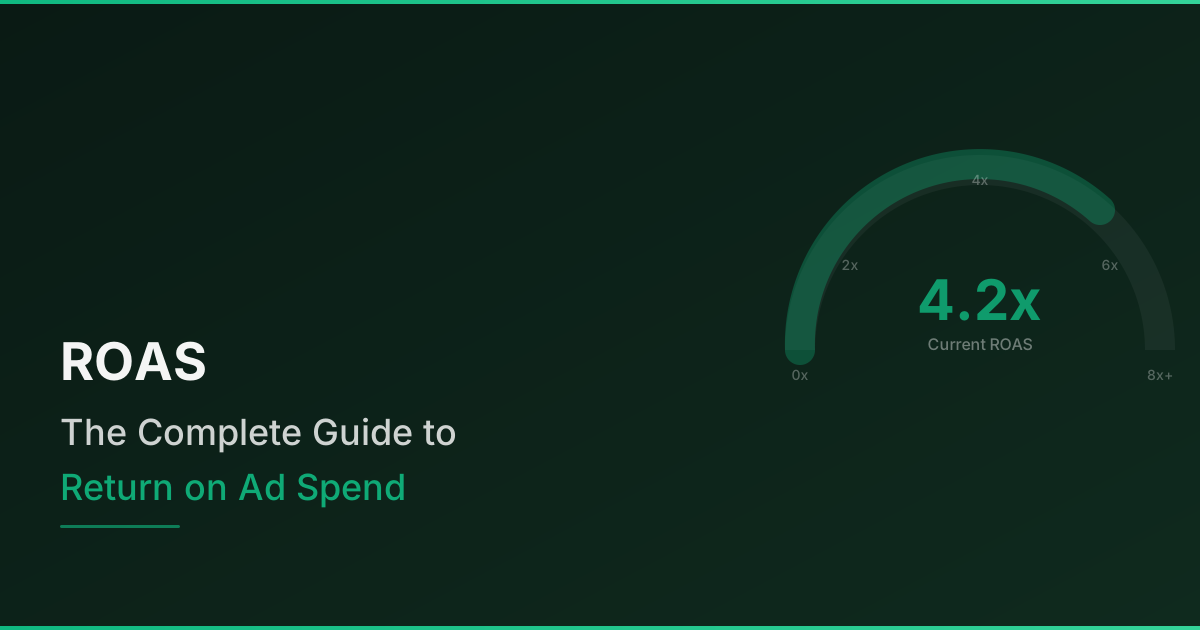
Return on ad spend is the single most important metric for measuring advertising profitability. It tells you how much revenue you earn for every dollar spent on ads. A ROAS of 4 means every dollar of ad spend generates four dollars in revenue. Understanding ROAS deeply, from the basic formula to breakeven calculations and industry benchmarks, is essential for making smart budget decisions and scaling profitably.
The Return on Ad Spend Formula
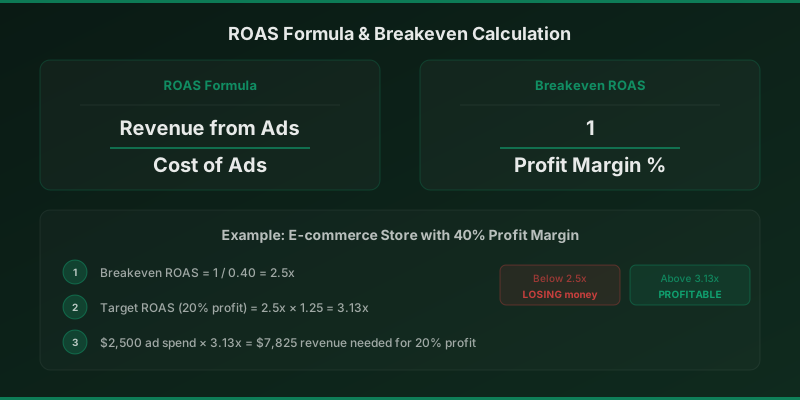
The ROAS formula is straightforward: Revenue from Ads divided by Cost of Ads. If a campaign generated $10,000 in revenue from $2,500 in ad spend, the ROAS is 4.0, often expressed as 4x or 400%.
ROAS = Revenue from Ads / Cost of Ads. A ROAS of 1.0 means you are breaking even on ad spend alone (not accounting for product costs). A ROAS below 1.0 means you are losing money on every dollar spent.
Meta Ads Manager reports ROAS automatically through the Purchase ROAS column. However, this number only includes revenue that Meta can track through its pixel or Conversions API. It does not capture offline conversions, phone orders, or revenue from returning customers who originally came through ads.
What Is a Good ROAS by Industry?
There is no universal good ROAS because profitability depends entirely on your margins. A 2x ROAS might be excellent for a software company with 90% margins but terrible for a retailer with 30% margins. That said, here are general benchmarks by industry:
| Industry | Average ROAS | Good ROAS | Excellent ROAS |
|---|---|---|---|
| E-commerce (Fashion) | 2.0-3.0x | 3.0-5.0x | 5.0x+ |
| E-commerce (Electronics) | 1.5-2.5x | 2.5-4.0x | 4.0x+ |
| SaaS/Software | 3.0-5.0x | 5.0-8.0x | 8.0x+ |
| Health & Wellness | 2.5-4.0x | 4.0-6.0x | 6.0x+ |
| Education/Courses | 3.0-5.0x | 5.0-10.0x | 10.0x+ |
| Local Services | 2.0-3.0x | 3.0-5.0x | 5.0x+ |
| Finance | 2.0-4.0x | 4.0-7.0x | 7.0x+ |
ROAS vs ROI: What Is the Difference?
ROAS measures revenue relative to ad spend. ROI (Return on Investment) measures profit relative to total investment. The key difference is that ROAS does not account for product costs, fulfillment, overhead, or any other expense beyond ad spend itself.
A campaign with a 3x ROAS might seem great, but if your product costs represent 50% of revenue and you have 10% overhead, your actual profit margin on ad-driven sales is only about 7% of revenue. ROAS tells you if ads are working. ROI tells you if your business is profitable.
Blended vs Campaign ROAS
Campaign ROAS looks at individual campaign performance. Blended ROAS, also called Marketing Efficiency Ratio (MER), looks at total revenue divided by total ad spend across all channels. Blended ROAS is more holistic but harder to act on. Campaign ROAS is actionable but misses the big picture.
The best approach is to track both. Use campaign ROAS for day-to-day optimization decisions and blended ROAS for strategic budget allocation across channels.
How to Calculate Breakeven ROAS
Stop wasting ad budget
NovaStorm AI cuts Meta Ads CPA by 40% on average. Start free.
Breakeven ROAS is the minimum ROAS you need to cover your costs. It is arguably the most important number in your ad account because it defines the line between profit and loss.
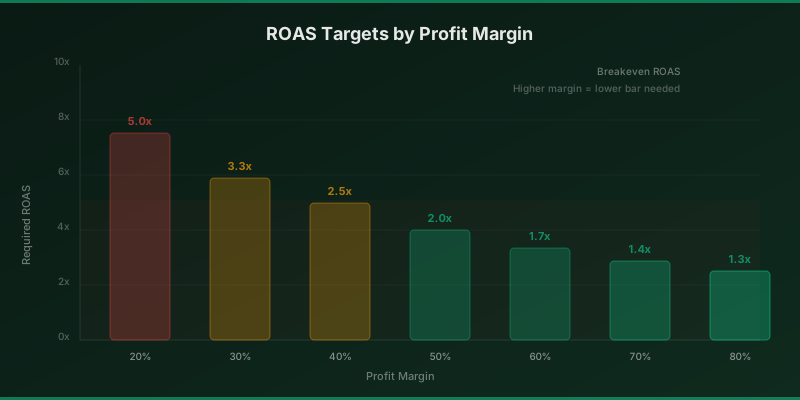
The formula is: Breakeven ROAS = 1 / Profit Margin. If your profit margin is 40%, your breakeven ROAS is 1 / 0.40 = 2.5x. This means you need to generate at least $2.50 in revenue for every $1 in ad spend just to break even.
| Profit Margin | Breakeven ROAS | Target ROAS (20% profit) |
|---|---|---|
| 20% | 5.0x | 6.25x |
| 30% | 3.33x | 4.17x |
| 40% | 2.5x | 3.13x |
| 50% | 2.0x | 2.5x |
| 60% | 1.67x | 2.08x |
| 70% | 1.43x | 1.79x |
| 80% | 1.25x | 1.56x |
Your target ROAS should be higher than breakeven to actually generate profit. A common approach is to set your target ROAS at 1.25x your breakeven ROAS, giving you a 20% profit margin on ad spend after all costs.
Improving Your Return on Ad Spend
There are two fundamental levers for improving ROAS: increase revenue per customer or decrease cost per acquisition. Here are practical strategies for both:
Increase Revenue Per Customer
- Increase average order value through bundles, upsells, and cross-sells
- Raise prices if your product supports it without killing conversion rate
- Improve your website conversion rate with better landing pages
- Add post-purchase upsell flows to maximize order value
- Focus ad spend on higher-value products or services
Decrease Cost Per Acquisition
- Test and iterate on creative constantly to find higher-performing ads
- Consolidate ad sets to improve algorithm optimization
- Use Advantage+ placements to let Meta find the cheapest inventory
- Refine audiences to focus on the highest-intent segments
- Improve ad relevance to lower CPMs through better Quality Ranking
The ROAS Trap: When High ROAS Is Not Good
Sources & Further Reading: WordStream — Facebook Ads Benchmarks by Industry — regularly updated industry benchmark data. HubSpot — What Is ROAS? — comprehensive ROAS formula breakdown and strategic context. Meta Business Help Center — About Purchase ROAS — how Meta calculates and reports return on ad spend.
A counterintuitive truth: very high ROAS can actually be a problem. If your ROAS is 10x, it probably means you are only reaching people who would have bought anyway, such as branded search or retargeting very warm audiences. High ROAS at low scale often means you are leaving money on the table by not investing in prospecting.
The goal is not the highest possible ROAS. The goal is the highest total profit. Sometimes accepting a lower ROAS by scaling into broader audiences generates more total revenue and more total profit even if efficiency dips. Think of ROAS as a guardrail, not a trophy.
Novastorm AI automates Meta Ads routine — from monitoring to optimization. Learn more at novastorm.ai
Disclaimer: This article was generated with the assistance of AI and reviewed by the NovaStorm AI team. While we strive for accuracy, we recommend verifying specific data points and consulting official sources (linked where available) for critical business decisions.
Ready to automate your Meta Ads?
NovaStorm AI takes full responsibility for your campaigns — from monitoring to optimization.
Get Started FreeRelated Articles
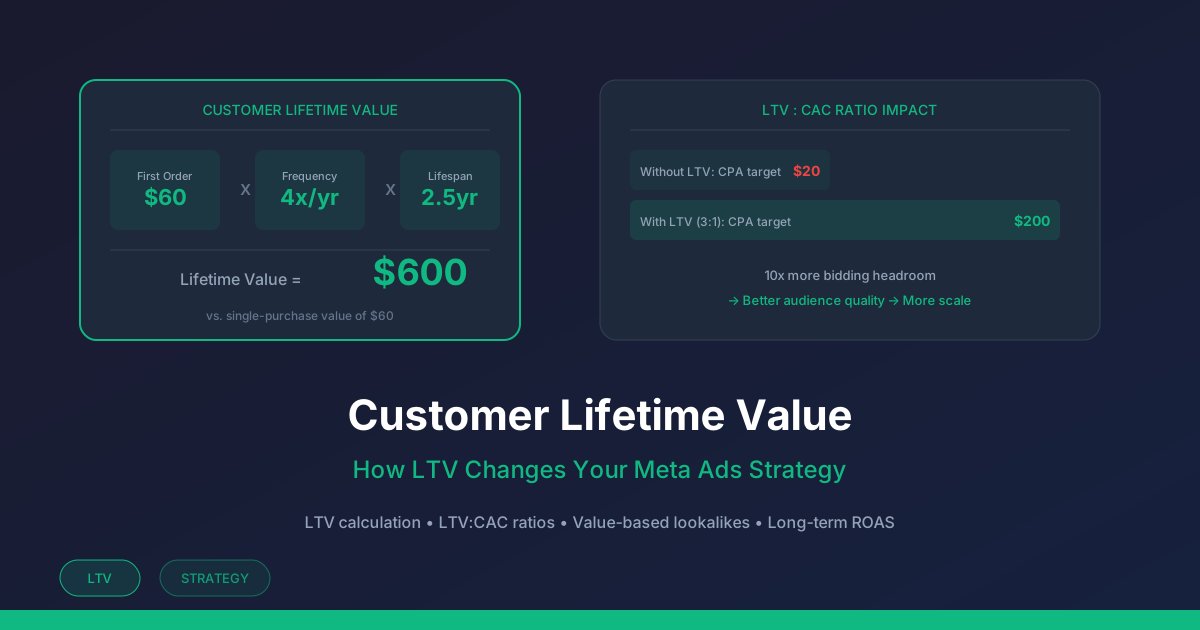
Customer Lifetime Value: How LTV Changes Your Meta Ads Strategy
Discover how customer lifetime value transforms your Meta Ads approach. Learn LTV calculation, LTV:CAC ratios, value-based lookalikes, and long-term ROAS strategy.
Value-Based Optimization in Meta Ads: Maximize Revenue Not Just Conversions
Master value-based optimization in Meta Ads to maximize revenue instead of just counting conversions. Learn VBO setup, data thresholds, and ROAS improvements.
Cost Per Result: Understanding Your True Acquisition Cost
Go beyond basic CPA to understand your true cost per result. Learn to calculate total acquisition cost including creative, tools, and time, plus benchmarks by vertical.