Post-Click Conversion Optimization for Meta Ads
Learn post-click conversion optimization strategies for Meta Ads that boost landing page performance by up to 47%. Actionable techniques for higher ROAS.
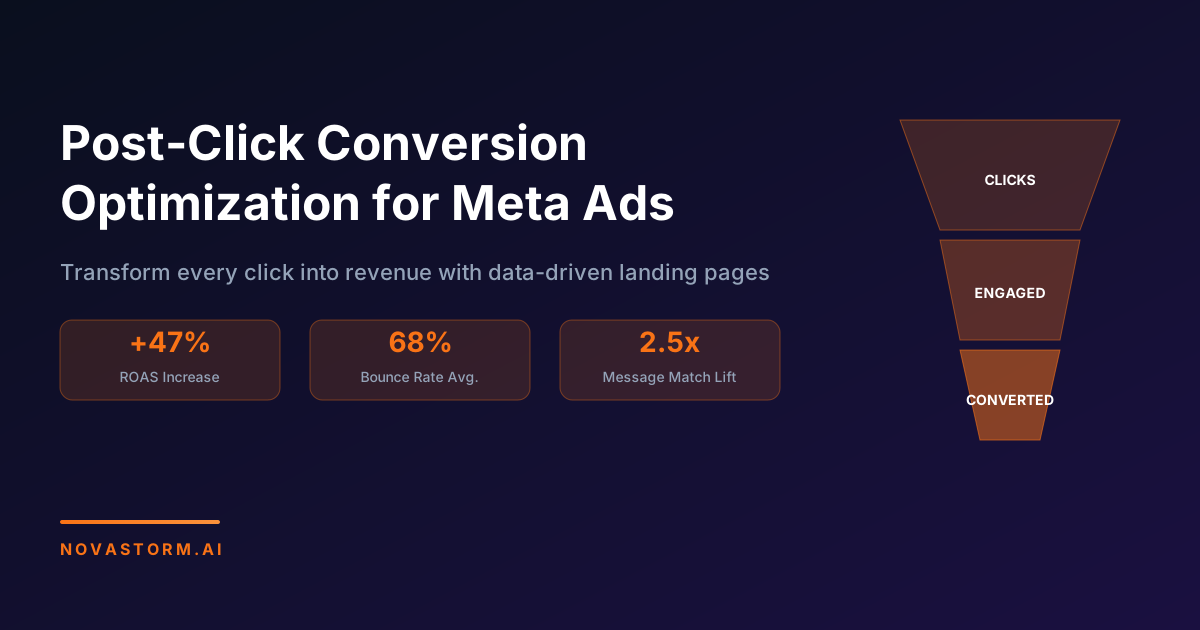
Post-click conversion optimization is the single most overlooked lever in Meta Ads performance. While most advertisers obsess over audience targeting and creative assets, the experience after a user clicks your ad determines whether that click becomes a customer. Studies show that improving your post-click conversion optimization strategy can increase overall ROAS by 47% without changing a single ad setting.
The disconnect between ad promise and landing page delivery is costing advertisers billions annually. Meta reports that 68% of ad clicks result in a bounce within 3 seconds, meaning the majority of your ad spend is wasted not because of poor targeting, but because of a broken post-click experience.
Why Post-Click Conversion Optimization Matters for Meta Ads
Meta Ads operates on an auction system where your bid, relevance score, and estimated action rate all influence delivery. What many advertisers miss is that conversion rates directly feed back into the algorithm. Higher conversion rates signal to Meta that your ads deliver value, which lowers your CPM and improves delivery.
Consider this: two advertisers with identical targeting and bids can see wildly different costs. The one with a 5% conversion rate pays an average of 34% less per impression than the one converting at 2%. The algorithm rewards post-click performance.
| Conversion Rate | Avg. CPA | Algorithm Reward | Delivery Priority |
|---|---|---|---|
| 1-2% | $38-52 | Low | Deprioritized |
| 3-4% | $22-30 | Medium | Standard |
| 5-7% | $14-20 | High | Boosted |
| 8%+ | $8-14 | Maximum | Premium |
Message Match: Bridging Ad Creative and Landing Page
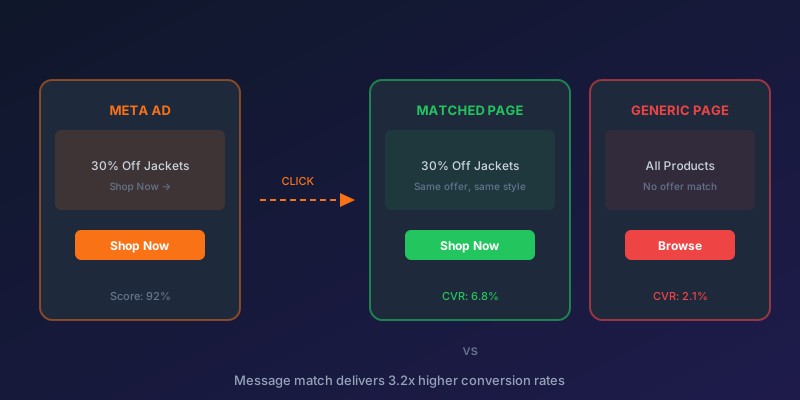
The most critical element of post-click optimization is message match. When a user clicks an ad promising 30% off winter jackets, they expect to see winter jackets at 30% off immediately upon landing. Any deviation creates cognitive friction that kills conversions.
Audit your current campaigns by mapping each ad variation to its destination URL. Score each pairing on visual consistency (colors, imagery), headline alignment, offer continuity, and CTA relevance. Campaigns with strong message match see conversion rates 2.5x higher than those with generic landing pages.
- Match the headline on your landing page to your ad headline verbatim
- Use the same primary image from your ad above the fold
- Repeat the exact offer terms visible in the ad creative
- Mirror the color palette and visual style of the ad
- Ensure the CTA uses the same action verb as the ad
Reducing Friction in the Conversion Funnel
Every additional step between ad click and conversion is a leak in your funnel. The average e-commerce checkout flow loses 23% of users per step. For lead generation, each additional form field reduces submissions by 11%. The math is brutal but clear: simplify or lose.
Start by mapping the exact number of actions required to convert after clicking your ad. Count every click, scroll, and field entry. Then systematically eliminate anything that does not directly contribute to the conversion event you are optimizing for.
Pro tip: Use session recording tools to watch real user behavior after clicking your Meta Ads. Identify the exact moment users hesitate or abandon. Fix those specific friction points first for the biggest conversion lift.
Stop wasting ad budget
NovaStorm AI cuts Meta Ads CPA by 40% on average. Start free.
Personalization Based on Ad Segment
Meta Ads lets you segment audiences with extraordinary precision. Your landing pages should reflect that same precision. Sending a cold prospecting audience and a warm retargeting audience to the same page is leaving money on the table.
Create landing page variations tailored to each audience segment. Cold traffic needs more social proof, longer explanations, and trust-building elements. Warm retargeting traffic needs urgency triggers, simplified checkout, and reminders of what they previously viewed.
| Audience Type | Key Landing Page Elements | Avg. Lift |
|---|---|---|
| Cold Prospecting | Testimonials, explainer video, FAQ section | +28% |
| Warm Retargeting | Urgency countdown, simplified form, cart reminder | +41% |
| Lookalike Audiences | Social proof, comparison table, free trial offer | +35% |
| Custom Audiences | Personalized greeting, loyalty perks, upsell offers | +52% |
Speed and Technical Performance
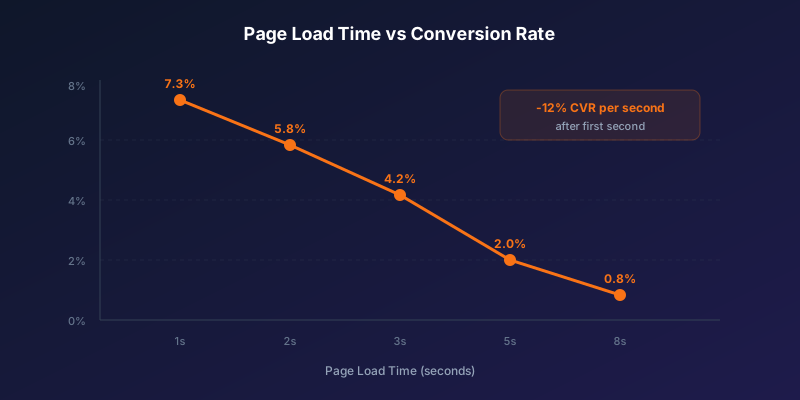
Page speed is a conversion killer that compounds with Meta Ads traffic. Mobile users arriving from Instagram or Facebook feeds expect instant gratification. Google research shows that a page loading in 5 seconds versus 1 second increases bounce probability by 90%.
Meta Ads traffic is predominantly mobile, with 78% of clicks coming from mobile devices. Yet many advertisers send this traffic to pages optimized for desktop. Compress images, eliminate render-blocking JavaScript, implement lazy loading, and target a Largest Contentful Paint under 2.5 seconds.
Testing and Iteration Framework
Post-click optimization is not a one-time project. It requires continuous testing driven by data. Establish a structured A/B testing framework where you test one variable at a time with statistical significance thresholds of 95% or higher.
Prioritize tests by potential impact. Headlines and CTAs typically produce the largest swings, followed by page layout, social proof placement, and form design. Run each test for a minimum of 7 days to account for day-of-week variation in Meta Ads traffic quality.
- Test headline variations first — they impact 40% of conversion decisions
- Experiment with CTA button color, copy, and placement
- Try different social proof formats: testimonials, logos, counters
- Test short-form vs long-form landing pages per audience segment
- Validate form length and field order with real traffic data
Use UTM parameters to segment your test results by Meta Ads campaign, ad set, and ad creative. This granularity reveals which landing page variations work best with specific audience-creative combinations.
Post-click conversion optimization is the fastest path to profitable Meta Ads scaling. By aligning your landing page experience with your ad promise, reducing friction, personalizing for segments, and continuously testing, you can transform the same traffic into significantly more revenue. The advertisers who master this discipline consistently outperform those who only optimize inside Ads Manager.
Novastorm AI automates Meta Ads routine — from monitoring to optimization. Learn more at novastorm.ai
Disclaimer: This article was generated with the assistance of AI and reviewed by the NovaStorm AI team. While we strive for accuracy, we recommend verifying specific data points and consulting official sources (linked where available) for critical business decisions.
Ready to automate your Meta Ads?
NovaStorm AI takes full responsibility for your campaigns — from monitoring to optimization.
Get Started FreeRelated Articles
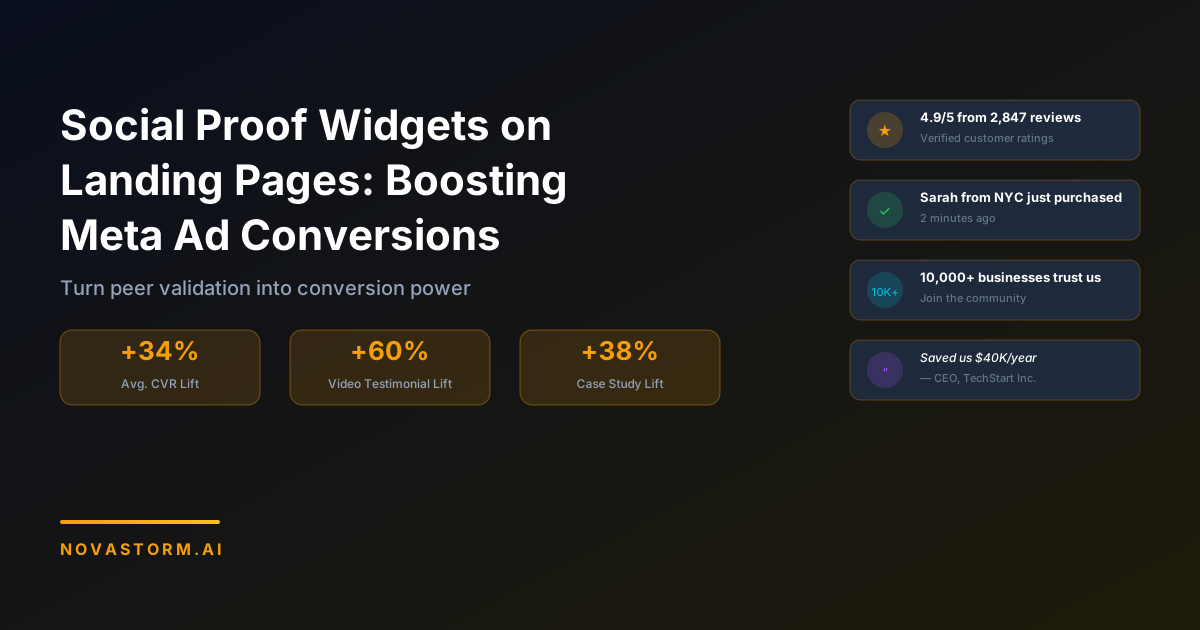
Social Proof Widgets on Landing Pages: Boosting Meta Ad Conversions
Deploy social proof widgets on landing pages to boost Meta Ad conversions by 34%. Learn which social proof types work best for paid social traffic.
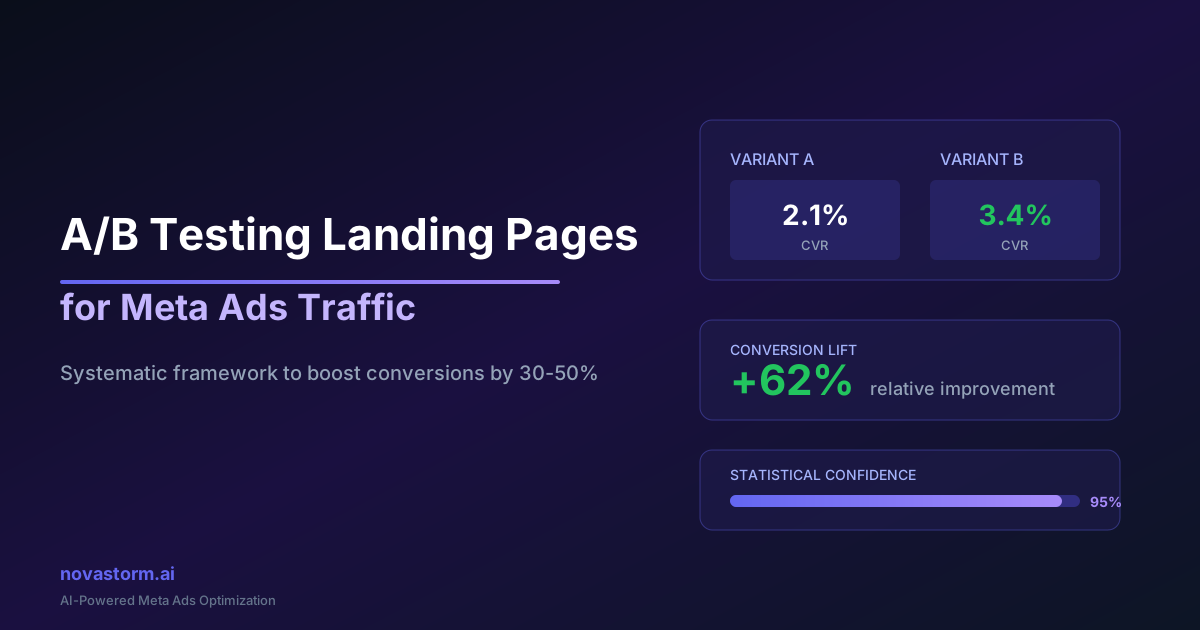
A/B Testing Landing Pages for Meta Ads Traffic
Learn how A/B testing landing pages for Meta Ads traffic can boost conversions by 30-50%. Step-by-step framework with sample sizes, duration, and tools.
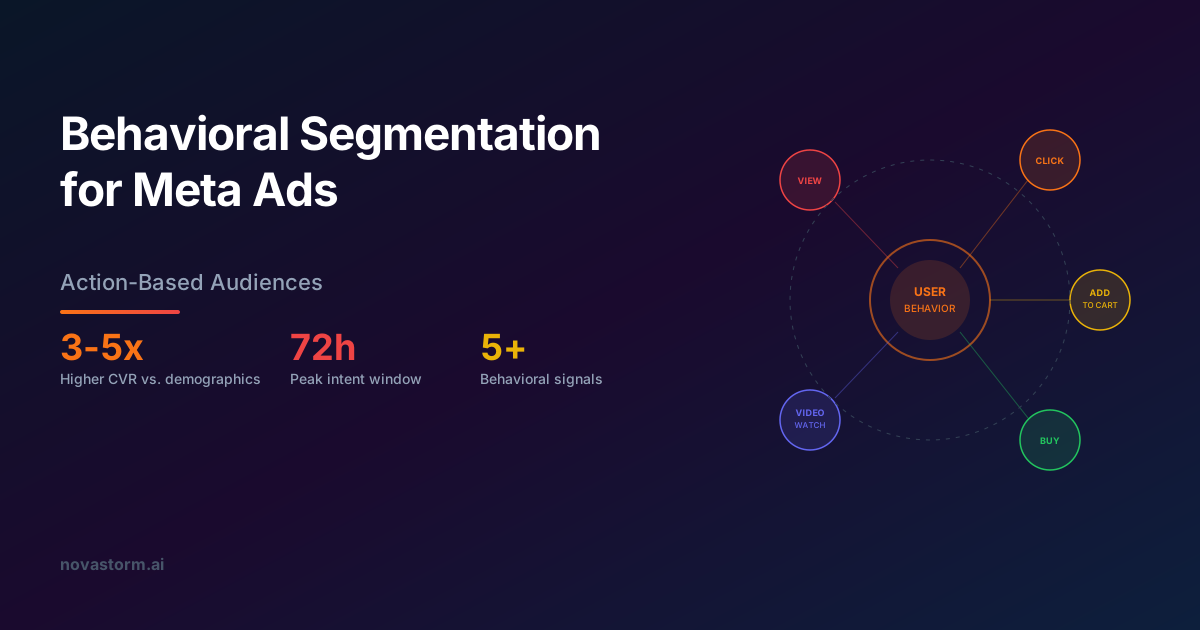
Behavioral Segmentation for Meta Ads: Action-Based Audiences
Master behavioral segmentation for Meta Ads. Build action-based audiences from website events, app activity, and engagement signals to drive higher conversion rates.