Micro-Influencer Ads on Meta: Small Creators Big Impact
Discover why micro-influencer ads on Meta outperform celebrity campaigns. Learn strategies for finding, briefing, and scaling small creator content on Facebook and Instagram.
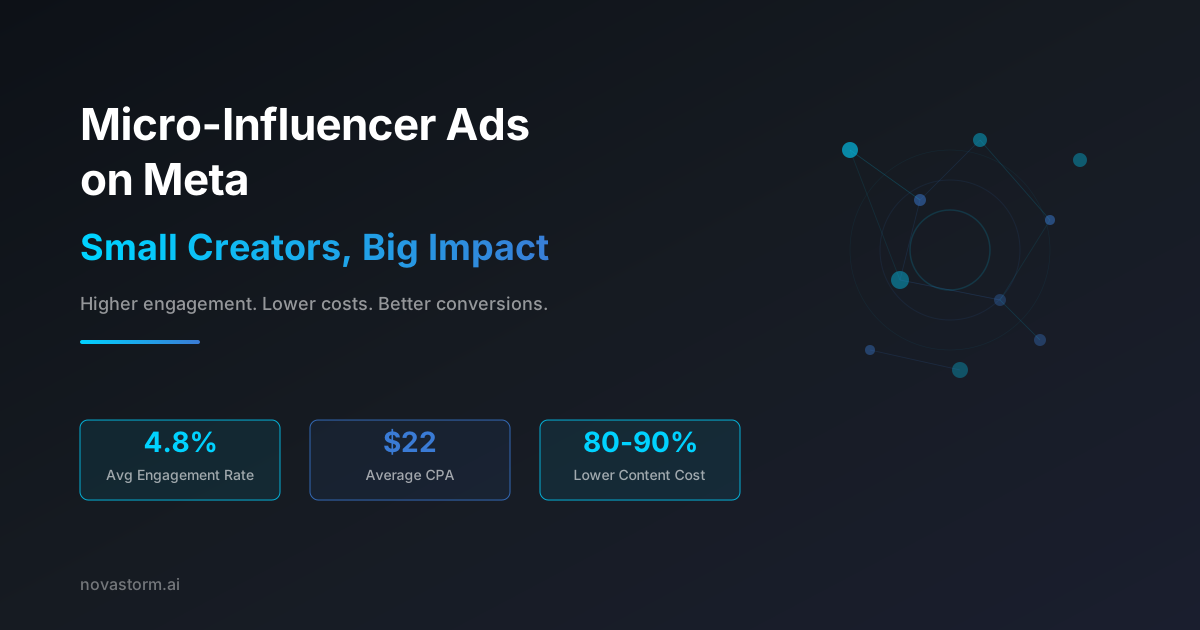
Micro-influencer ads on Meta are redefining performance marketing by proving that audience size matters far less than audience trust. Creators with 5,000 to 50,000 followers consistently deliver higher engagement, better conversion rates, and lower costs than their celebrity counterparts when their content is amplified through Meta's ad platform.
The shift toward micro-influencer ads on Meta reflects a broader market reality. Consumers are tired of overly produced celebrity endorsements. They want recommendations from people who feel relatable, genuine, and knowledgeable about the products they promote. Small creators fill this gap perfectly.
The Micro-Influencer Advantage in Meta Ads Campaigns
Micro-influencers generate engagement rates between 3.5% and 7.2% on Instagram, compared to 1.1% for accounts with over one million followers. When you run micro-influencer ads on Meta using this high-engagement content, the algorithm rewards it with better delivery and lower costs.
The cost advantage compounds across the funnel. Micro-influencer content fees are typically 80-90% lower than macro or celebrity rates, meaning you can produce more creative variations for the same budget. More variations mean more opportunities for the Meta algorithm to find winning combinations.
| Creator Tier | Followers | Avg Engagement | Content Cost | CPA When Amplified |
|---|---|---|---|---|
| Nano | 1K-5K | 6.2% | $50-200 | $18 |
| Micro | 5K-50K | 4.8% | $200-2,000 | $22 |
| Mid-Tier | 50K-500K | 2.4% | $2,000-15,000 | $31 |
| Macro | 500K-1M | 1.6% | $15,000-50,000 | $38 |
| Celebrity | 1M+ | 1.1% | $50,000+ | $45 |
Finding the Right Micro-Influencers for Paid Amplification
The search for micro-influencers who will perform well in Meta ads goes beyond browsing hashtags. You need a systematic approach that evaluates creators on content quality, audience authenticity, and brand alignment before investing in partnerships.
- Analyze audience demographics using creator analytics platforms to verify alignment with your targeting
- Review comment quality to assess genuine engagement versus bot activity
- Evaluate content production quality for ad-readiness without heavy post-production
- Check previous brand partnerships for professionalism and content consistency
- Test with a small paid amplification budget before committing to larger deals
- Prioritize creators who naturally use or show interest in your product category
Briefing Micro-Influencers for Meta Ad Performance
The brief you provide to micro-influencers directly determines how well their content performs as micro-influencer ads on Meta. The key is providing enough structure to ensure brand messaging comes through while leaving enough creative freedom for the content to feel authentic.
Include specific talking points, product demonstration requirements, and call-to-action language in your brief. But avoid scripting every word. The most effective micro-influencer content sounds conversational and unrehearsed, which is exactly what stops the scroll in Meta ad placements.
Avoid over-directing micro-influencers. Content that feels scripted or overly polished loses the authenticity advantage that makes small creators effective in paid ads. Provide guardrails, not scripts.
Campaign Structure for Micro-Influencer Ads on Meta
Stop wasting ad budget
NovaStorm AI cuts Meta Ads CPA by 40% on average. Start free.
Structure your micro-influencer ads on Meta campaigns to maximize creative testing while maintaining statistical significance. The recommended approach is a consolidated campaign with multiple ad sets, each containing creatives from different micro-influencers targeting the same audience.
This structure allows Meta's machine learning to quickly identify which creator's content resonates best with each audience segment. Within the first 48-72 hours, the algorithm will shift budget toward the highest-performing creatives, giving you clear data on which partnerships to scale.
- Create one campaign with your primary conversion objective
- Build 2-3 ad sets targeting different audience segments
- Add 3-5 micro-influencer creatives per ad set
- Set minimum spend thresholds per creative to ensure fair testing
- Run for 7 days before making optimization decisions
- Scale winners by increasing budget 20-30% every 3 days
- Replace underperformers with new creator content monthly
Scaling Micro-Influencer Content Production
The biggest challenge with micro-influencer ads on Meta at scale is maintaining a consistent pipeline of fresh creative. Creative fatigue hits faster on Meta than on most platforms, meaning you need a steady stream of new content to sustain performance over time.
Build an always-on creator roster of 15-25 micro-influencers who produce content on a monthly cadence. This gives you 15-25 new creatives per month to test, ensuring you always have fresh material entering the rotation before existing ads fatigue.
| Program Scale | Active Creators | Monthly Creatives | Monthly Content Cost | Expected CPA |
|---|---|---|---|---|
| Starter | 5-10 | 5-10 | $1,000-5,000 | $25-30 |
| Growth | 15-25 | 15-25 | $5,000-15,000 | $20-25 |
| Scale | 30-50 | 30-60 | $15,000-40,000 | $16-22 |
| Enterprise | 50+ | 60+ | $40,000+ | $14-18 |
Measuring ROI and Optimizing Your Micro-Influencer Program
Track every micro-influencer's content performance individually to build a data-driven understanding of what works. Create a scoring system that evaluates each creator based on CPA, ROAS, engagement rate, and content production reliability.
The most successful programs use this performance data to create a tiered partnership model. Top performers receive larger briefs, higher compensation, and long-term contracts. Mid-tier creators continue on a project basis. Underperformers are replaced with new creators from your prospecting pipeline.
Build a creative library organized by creator, content format, and performance metrics. This becomes your most valuable asset for understanding which micro-influencer content styles drive the best Meta Ads results across different audience segments and campaign objectives.
The micro-influencer ads on Meta model works because it aligns incentives between brands, creators, and audiences. Brands get authentic content at scale, creators get paid distribution that grows their audience, and consumers get recommendations from people they trust. Start small, measure everything, and let the data guide your scaling decisions.
Novastorm AI automates Meta Ads routine — from monitoring to optimization. Learn more at novastorm.ai
Disclaimer: This article was generated with the assistance of AI and reviewed by the NovaStorm AI team. While we strive for accuracy, we recommend verifying specific data points and consulting official sources (linked where available) for critical business decisions.
Ready to automate your Meta Ads?
NovaStorm AI takes full responsibility for your campaigns — from monitoring to optimization.
Get Started FreeRelated Articles
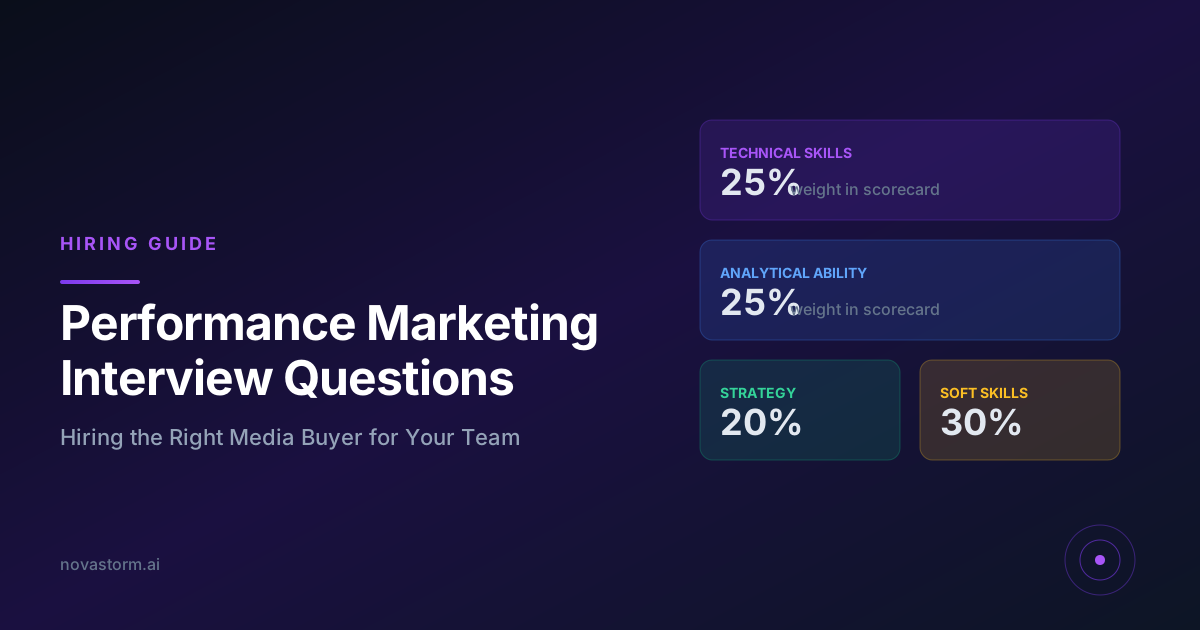
Performance Marketing Interview Questions: Hiring the Right Buyer
Discover the best performance marketing interview questions to hire top media buyers. Covers technical skills, platform knowledge, and strategic thinking.

North Star Metric for Meta Ads: Choosing the Right Optimization Goal
Define your North Star Metric for Meta Ads to align every campaign toward a single meaningful goal. Stop optimizing for vanity metrics and start driving growth.

Blended ROAS: Why You Should Stop Optimizing Per-Channel
Discover why blended ROAS is a better North Star than per-channel metrics. Learn how to calculate, track, and optimize blended ROAS for Meta Ads and beyond.