Blended ROAS: Why You Should Stop Optimizing Per-Channel
Discover why blended ROAS is a better North Star than per-channel metrics. Learn how to calculate, track, and optimize blended ROAS for Meta Ads and beyond.

Blended ROAS is the single most important metric for modern performance marketers, yet most teams still obsess over per-channel numbers. When you optimize Meta Ads ROAS in isolation, you make decisions that look great on paper but hurt total business performance. A retargeting campaign showing 10x ROAS might actually be cannibalizing organic conversions, while a prospecting campaign at 1.5x ROAS might be the true growth engine.
The solution is blended ROAS: total revenue divided by total ad spend across all channels. This single number tells you whether your marketing is profitable and growing. It cuts through the noise of double-counted conversions, attribution disputes, and per-channel vanity metrics.
The Problem with Per-Channel ROAS
Per-channel ROAS creates a dangerous illusion. Every platform claims credit for the same conversion, inflating total attributed revenue by 30-60% across channels. When you sum up attributed revenue from Meta, Google, TikTok, and email, the total often exceeds actual revenue by 40% or more.
This over-attribution problem leads to predictable budget mistakes. Retargeting budgets grow because they show high ROAS, prospecting budgets shrink because they show low ROAS, and overall growth stalls because nobody is filling the top of the funnel.
| Channel | Attributed Revenue | Attributed ROAS | True Incremental Contribution |
|---|---|---|---|
| Meta Ads | $450,000 | 4.5x | ~$280,000 |
| Google Ads | $380,000 | 5.2x | ~$310,000 |
| TikTok Ads | $120,000 | 2.4x | ~$95,000 |
| Email/SMS | $280,000 | 12.0x | ~$60,000 |
| Total Attributed | $1,230,000 | - | - |
| Actual Revenue | $820,000 | - | - |
| Over-Attribution | 50% | - | - |
Warning: If the sum of your per-channel attributed revenue exceeds your actual revenue, your budget decisions are based on inflated data. This is not a tracking error; it is how multi-touch attribution works across siloed platforms.
How to Calculate Blended ROAS
The formula is simple: Blended ROAS = Total Revenue / Total Ad Spend. No attribution model, no platform bias, no double counting. Use your actual revenue from Shopify, Stripe, or your ERP, not platform-reported revenue.
For a company spending $200,000 per month across all paid channels and generating $820,000 in total revenue, the blended ROAS is 4.1x. This is your true marketing efficiency, and it is the number you should optimize against.
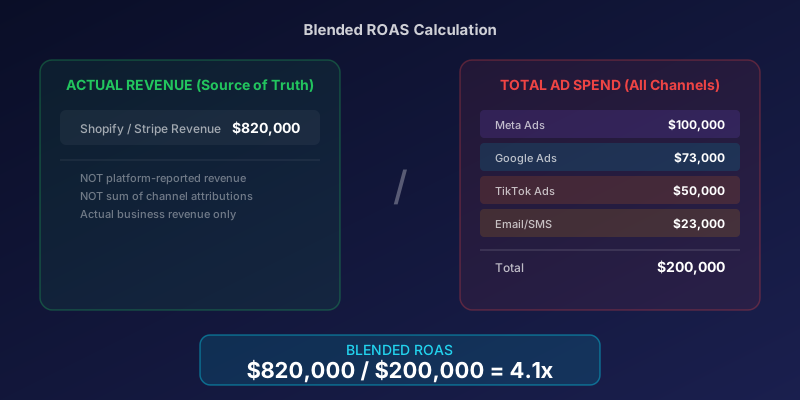
- Use source-of-truth revenue (Shopify, Stripe, ERP), not platform-reported numbers
- Include ALL paid media spend: Meta, Google, TikTok, affiliates, influencers
- Calculate weekly and monthly for trend analysis
- Track alongside new customer acquisition cost for growth health
Using Blended ROAS to Guide Meta Ads Decisions
Here is the practical framework: increase Meta Ads spend as long as blended ROAS stays above your profitability threshold. When you add $10,000 to Meta Ads prospecting and blended ROAS drops from 4.1x to 3.9x but stays above your 3.0x target, the increase is working.
Conversely, if you cut Meta Ads retargeting by $5,000 and blended ROAS stays flat or increases, that retargeting spend was not creating incremental value. The money was going to users who would have converted anyway through organic channels or other paid touchpoints.
Stop wasting ad budget
NovaStorm AI cuts Meta Ads CPA by 40% on average. Start free.
| Scenario | Meta Spend Change | Blended ROAS Change | Decision |
|---|---|---|---|
| Scale prospecting +$10K | 4.1x → 3.9x | Still above 3.0x target | Keep scaling |
| Scale prospecting +$25K | 3.9x → 2.8x | Below 3.0x target | Pull back, find efficiency first |
| Cut retargeting -$5K | 4.1x → 4.2x | Improved | Confirm retargeting was cannibalizing |
| Cut retargeting -$5K | 4.1x → 3.5x | Dropped significantly | Retargeting was adding value, restore |
Pro tip: Run blended ROAS experiments over 2-week periods. Make one budget change at a time and measure the impact on blended ROAS. This isolates the effect of each decision and builds your understanding of channel interactions.
The MER Alternative: Media Efficiency Ratio
Some marketers prefer Media Efficiency Ratio (MER), which is identical to blended ROAS in concept but framed differently. MER = Total Revenue / Total Marketing Spend (including non-media costs like agency fees, creative production, and tools). MER gives a more complete picture of marketing efficiency.
Choose one metric and track it consistently. Blended ROAS focuses on media spend; MER includes all marketing costs. For Meta Ads optimization specifically, blended ROAS is usually sufficient because it directly connects spend changes to revenue outcomes.
Building a Blended ROAS Dashboard
Your blended ROAS dashboard should combine revenue from your source of truth (e-commerce platform or CRM) with spend data from all ad platforms. Update it daily and track weekly trends. Include trailing 7-day, 14-day, and 28-day windows to smooth out daily volatility.
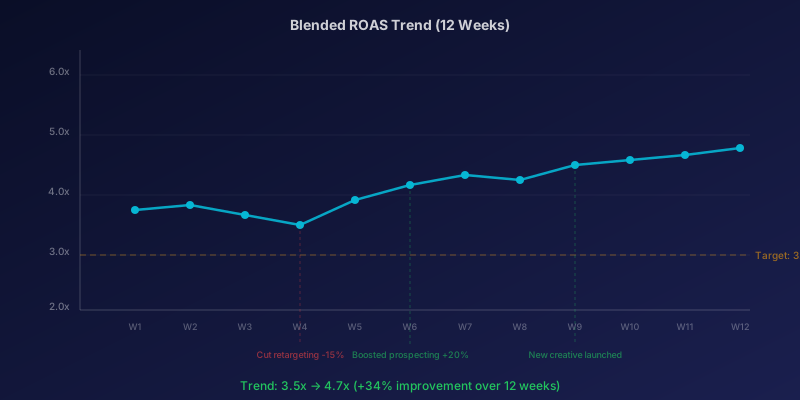
- Daily blended ROAS (with 7-day rolling average for smoothing)
- Weekly blended ROAS trend with budget change annotations
- Blended ROAS by new vs returning customers to separate acquisition from retention
- Channel spend breakdown alongside blended ROAS to correlate changes
When Per-Channel Metrics Still Matter
Blended ROAS is your North Star, but per-channel metrics still have a role. Use them for creative optimization within a channel (which ad creative performs best on Meta), for pacing and budget management (is Meta hitting its daily spend target), and for diagnosing drops in blended ROAS (which channel changed).
The distinction is between strategic decisions (where should budget go) and tactical decisions (how to execute within a channel). Blended ROAS drives strategy. Per-channel metrics drive tactics. Confusing the two leads to the over-attribution trap that most brands fall into.
Data insight: Brands that switched from per-channel ROAS targets to blended ROAS targets saw an average 17% increase in total revenue within 90 days, primarily by reallocating over-invested retargeting budgets to under-invested prospecting campaigns.
Novastorm AI automates Meta Ads routine — from monitoring to optimization. Learn more at novastorm.ai
Disclaimer: This article was generated with the assistance of AI and reviewed by the NovaStorm AI team. While we strive for accuracy, we recommend verifying specific data points and consulting official sources (linked where available) for critical business decisions.
Ready to automate your Meta Ads?
NovaStorm AI takes full responsibility for your campaigns — from monitoring to optimization.
Get Started FreeRelated Articles
Performance Marketing Interview Questions: Hiring the Right Buyer
Discover the best performance marketing interview questions to hire top media buyers. Covers technical skills, platform knowledge, and strategic thinking.
Micro-Influencer Ads on Meta: Small Creators Big Impact
Discover why micro-influencer ads on Meta outperform celebrity campaigns. Learn strategies for finding, briefing, and scaling small creator content on Facebook and Instagram.

North Star Metric for Meta Ads: Choosing the Right Optimization Goal
Define your North Star Metric for Meta Ads to align every campaign toward a single meaningful goal. Stop optimizing for vanity metrics and start driving growth.