Cross-Platform Retargeting Pools: Combining Meta and Google Data
Learn how to build cross-platform retargeting pools that combine Meta and Google audience data for unified multi-channel remarketing strategies.

Your prospects do not live on a single platform. They search on Google, scroll through Instagram, watch YouTube, and browse Facebook. Yet most advertisers build separate retargeting pools for each platform, creating fragmented experiences and duplicated efforts. Cross-platform retargeting pools that combine Meta and Google data give you a unified view of your audience and dramatically more effective remarketing.
Building cross-platform retargeting pools is not about merging databases. It is about creating a strategic framework where insights from one platform inform actions on the other. When done correctly, this approach improves targeting precision, reduces frequency waste, and creates a cohesive brand experience across every touchpoint.
Why Platform-Siloed Retargeting Fails
Running isolated retargeting campaigns on Meta and Google means you are treating the same person as two different prospects. Someone who clicked your Google search ad and then saw your Meta retargeting ad is one person on one journey. But your campaigns treat them as separate entities, often showing redundant messaging and wasting impressions.
| Problem | Impact on Meta | Impact on Google | Combined Effect |
|---|---|---|---|
| Duplicate impressions | Over-frequency on Facebook/IG | Over-frequency on GDN/YouTube | Brand fatigue, wasted budget |
| Inconsistent messaging | Different offer on Meta | Different offer on Google | Confused prospects |
| Blind spots | Cannot see Google search intent | Cannot see social engagement | Incomplete user picture |
| Attribution conflicts | Both claim same conversion | Both claim same conversion | Inflated reported ROAS |
| Uncoordinated budgets | Overspending on same users | Overspending on same users | Inefficient total spend |
Architecture of Cross-Platform Retargeting Pools
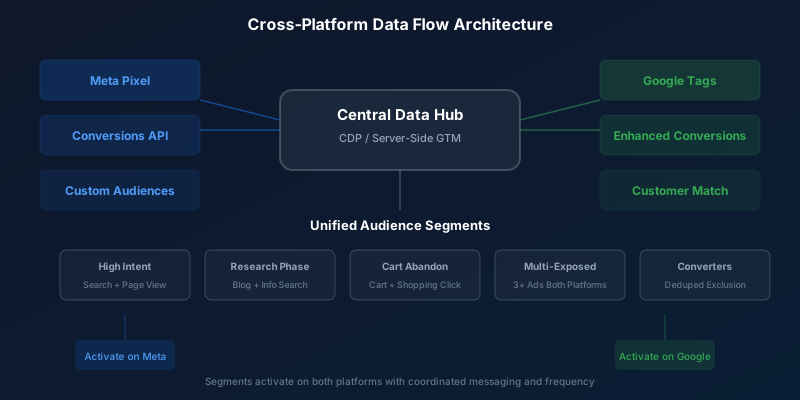
Cross-platform retargeting pools use a central data layer to synchronize audience information between Meta and Google. This layer collects behavioral data from both platforms and creates unified audience segments that can be activated on either channel.
The Central Data Hub
Your website serves as the natural data hub. Both Meta Pixel and Google Tags fire on the same pages, capturing the same user behavior. A Customer Data Platform or server-side tagging setup can enrich this data with cross-platform identifiers, creating a single user profile that spans both ecosystems.
- Implement server-side tagging via Google Tag Manager to consolidate event data
- Use enhanced conversions on Google and the Conversions API on Meta for server-side tracking
- Deploy a Customer Data Platform that unifies user profiles across platforms
- Create consistent UTM parameters that track source platform for every touchpoint
- Set up cross-platform conversion deduplication using order IDs or transaction identifiers
Building Unified Audience Segments
With cross-platform retargeting pools in place, you can build audience segments that incorporate signals from both Meta and Google. These unified segments are richer and more predictive than single-platform audiences because they capture a wider range of intent signals.
| Unified Segment | Meta Signal | Google Signal | Retargeting Strategy |
|---|---|---|---|
| High-Intent Browsers | Product page view on FB/IG | Brand keyword search | Aggressive retargeting, both platforms |
| Research Phase | Blog content engagement | Informational keyword click | Educational content retargeting |
| Comparison Shoppers | Competitor page engagement | Competitor keyword search | Differentiation messaging |
| Cart Abandoners | Add to cart event | Shopping ad click, no purchase | Urgency-based retargeting |
| Multi-Touch Exposed | Viewed 3+ Meta ads | Clicked 2+ Google ads | Final push with exclusive offer |
Use first-party data like email addresses to create cross-platform retargeting pools directly. Upload the same customer list to both Meta Custom Audiences and Google Customer Match. This creates a deterministic match that works regardless of cookie limitations.
Coordinating Messaging Across Platforms
Stop wasting ad budget
NovaStorm AI cuts Meta Ads CPA by 40% on average. Start free.
Cross-platform retargeting pools enable coordinated messaging strategies where each platform plays a specific role. Rather than showing the same ad everywhere, you assign different objectives to different channels based on their strengths.
Meta excels at visual storytelling, emotional appeals, and social proof. Use it for brand-building retargeting that builds familiarity and trust. Google excels at capturing intent and delivering information at the moment of need. Use it for bottom-funnel retargeting when prospects are actively searching for solutions.
This role-based approach prevents redundant messaging and ensures each platform contributes unique value to the conversion journey. A prospect might see a testimonial carousel on Instagram, then encounter a search ad with pricing details when they Google your brand name the next day. The experience feels natural and progressive rather than repetitive.
Frequency Management Across Platforms
One of the biggest benefits of cross-platform retargeting pools is holistic frequency management. Without coordination, a user might see five Meta retargeting ads and five Google retargeting ads in the same day. With a unified approach, you cap total impressions across both platforms.
- Set a combined daily frequency target of 3-5 total impressions across both platforms
- Use platform-specific frequency caps that account for the other platform's exposure
- Monitor cross-platform reach and frequency reports using your CDP or analytics platform
- Reduce Meta frequency for users who are seeing heavy Google remarketing and vice versa
- Implement sequential exposure rules where Meta ads precede Google ads in the funnel sequence
Attribution and Measurement for Cross-Platform Pools
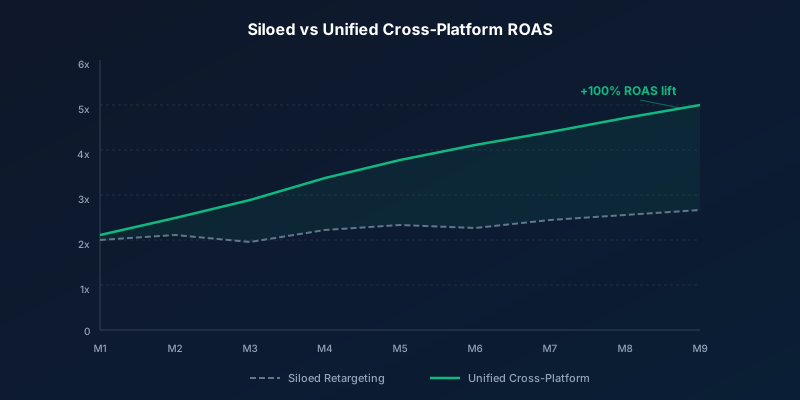
Cross-platform retargeting pools require cross-platform attribution. Relying on each platform's native attribution model overstates performance because both Meta and Google will claim credit for the same conversion. You need an independent measurement layer.
Implement a multi-touch attribution model using your analytics platform or a dedicated attribution tool. Assign fractional credit to each touchpoint based on its role in the conversion path. This reveals which platform drives the most incremental value and where your cross-platform retargeting pools generate the highest returns.
Run incrementality tests by suppressing retargeting on one platform for a holdout group while maintaining it on the other. This reveals the true incremental lift each platform provides when operating as part of your cross-platform retargeting pools.
Automation for Cross-Platform Management
Managing cross-platform retargeting pools manually is exceptionally labor-intensive. You need to monitor audiences on both platforms, coordinate budgets, align messaging, manage frequency holistically, and reconcile attribution. AI-powered tools that span both ecosystems can automate audience synchronization, budget allocation across platforms, and real-time frequency management.
The advertisers who master cross-platform retargeting pools gain a significant efficiency advantage. They reach the same prospects with fewer total impressions, deliver more coherent messaging, and allocate budget based on true incremental value rather than platform-inflated metrics. In a world where customers move freely between platforms, your retargeting strategy must move with them.
Novastorm AI automates Meta Ads routine — from monitoring to optimization. Learn more at novastorm.ai
Disclaimer: This article was generated with the assistance of AI and reviewed by the NovaStorm AI team. While we strive for accuracy, we recommend verifying specific data points and consulting official sources (linked where available) for critical business decisions.
Ready to automate your Meta Ads?
NovaStorm AI takes full responsibility for your campaigns — from monitoring to optimization.
Get Started FreeRelated Articles
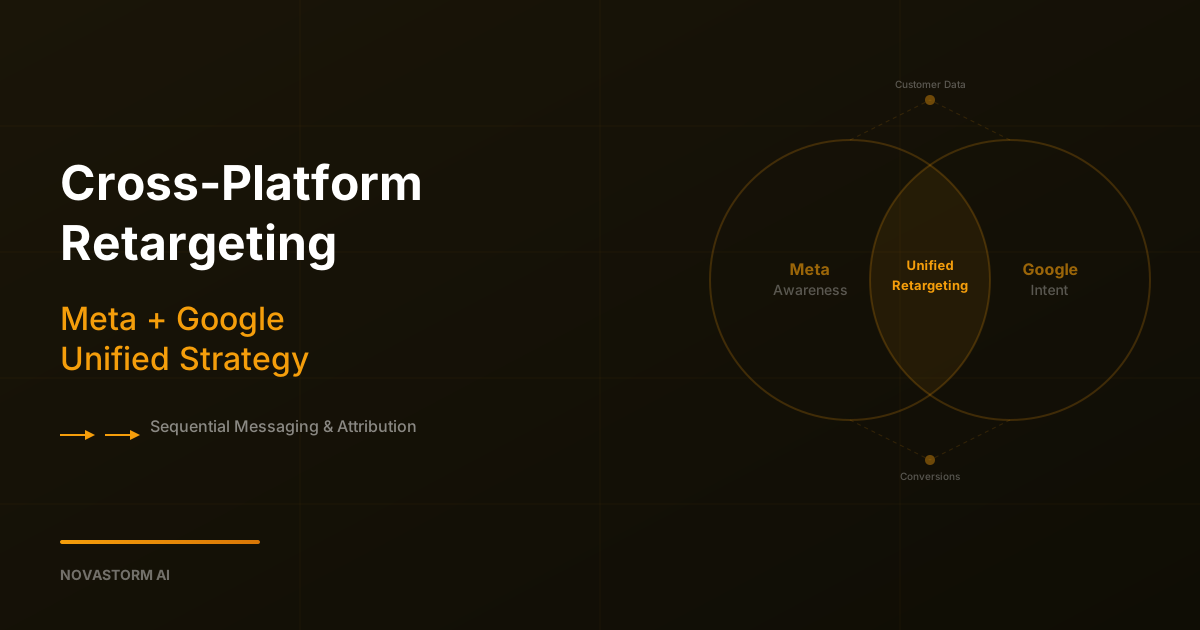
Cross-Platform Retargeting: Meta + Google Unified Strategy
Build a unified cross-platform retargeting strategy combining Meta and Google Ads. Learn audience sync, sequential messaging, attribution, and budget allocation across platforms.
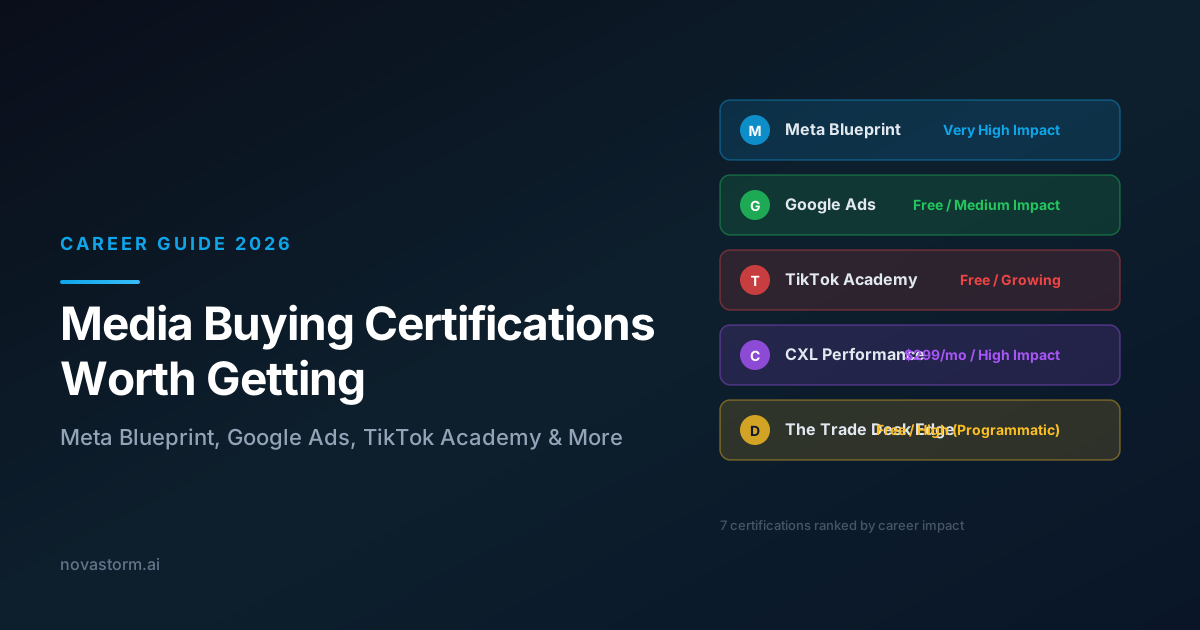
Media Buying Certifications Worth Getting: Meta Blueprint and Beyond
Compare the best media buying certifications in 2026. Includes Meta Blueprint, Google Ads, TikTok Academy, and more with ROI analysis for each.
The End of Detailed Targeting Exclusions: What It Means for Advertisers
Meta is removing detailed targeting exclusions from Ads Manager. Learn what this change means for your campaigns and how to adapt your audience strategy.