Confirmation Bias in Ad Targeting: Showing People What They Want to Believe
Learn how confirmation bias in ad targeting improves Meta Ads performance. Align your messaging with audience beliefs to increase CTR by 35% and reduce CPA.
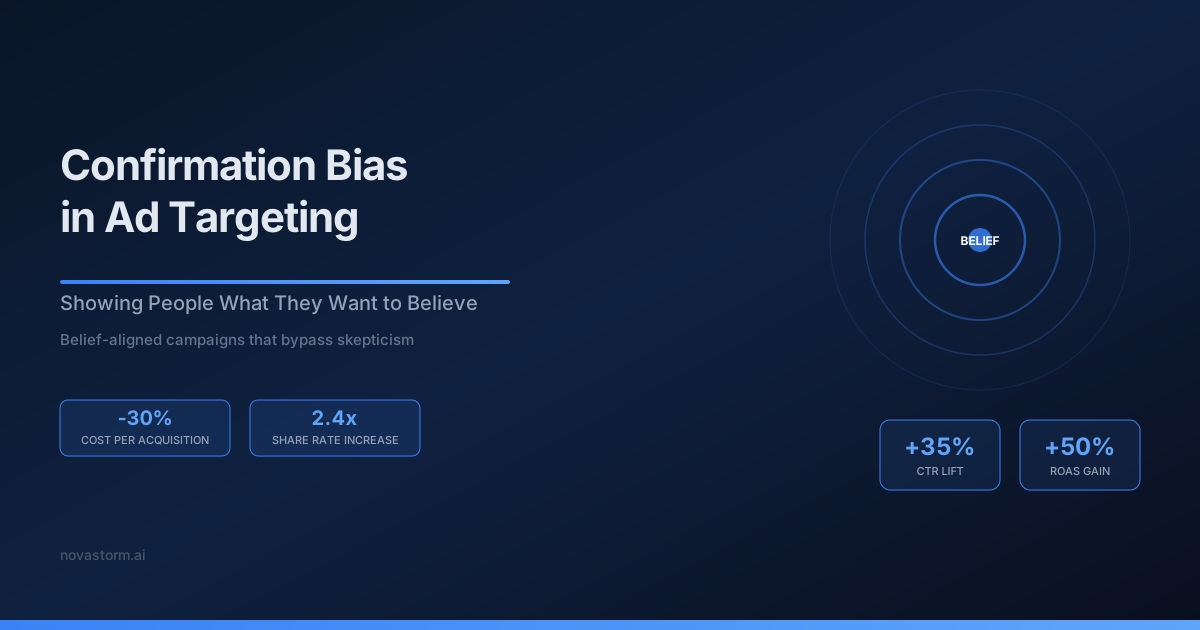
Every person scrolling through their Meta feed carries a set of deeply held beliefs about themselves, their problems, and what solutions look like. Confirmation bias in ad targeting is the strategic practice of aligning your advertising message with these pre-existing beliefs, making your ad feel less like an interruption and more like a validation.
This is not about manipulation. It is about relevance. When your ad confirms what someone already suspects about their situation, it bypasses the skepticism barrier that kills most advertising campaigns. The result is higher engagement, lower cost per acquisition, and dramatically better return on ad spend.
Understanding Confirmation Bias in the Context of Digital Advertising
Confirmation bias is the tendency to search for, interpret, and remember information that confirms one's preconceptions. In advertising, this means people are naturally drawn to messages that align with what they already believe. They scroll past contradictory information and engage with confirming content.
Meta's ad platform is uniquely positioned to leverage confirmation bias in ad targeting because its algorithm already learns user preferences and beliefs through engagement signals. Every like, comment, share, and click teaches the algorithm what a user's worldview looks like. Your job as an advertiser is to craft messages that fit into that worldview.
A Stanford study found that people spend 36% more time reading content that confirms their existing beliefs and are 2.4x more likely to share it. In the Meta feed, this translates directly to higher engagement rates and better algorithmic distribution.
Mapping Audience Beliefs for Confirmation-Aligned Campaigns
Before you can align your ads with audience beliefs, you need to map those beliefs. This goes beyond standard demographic targeting. Belief mapping requires understanding the stories your audience tells themselves about their problems and the solutions they have already tried.
Start with customer research. Mine your reviews, support tickets, and social media comments for recurring phrases and assumptions. These reveal the belief frameworks your audience operates within. Confirmation bias in ad targeting works best when you use the exact language your audience uses to describe their own situation.
| Belief Category | Example Belief | Ad Alignment Strategy |
|---|---|---|
| Identity beliefs | "I'm someone who values quality over price" | Lead with premium positioning, avoid discount language |
| Problem beliefs | "My current tool is too complicated" | Emphasize simplicity, show one-click solutions |
| Solution beliefs | "AI is the future of marketing" | Frame product as AI-powered, use tech-forward language |
| Market beliefs | "Most agencies overcharge" | Highlight transparent pricing, show value comparison |
| Self-efficacy beliefs | "I can do this myself with the right tool" | Position as self-service, emphasize user empowerment |
Structuring Meta Ad Campaigns Around Belief Segments
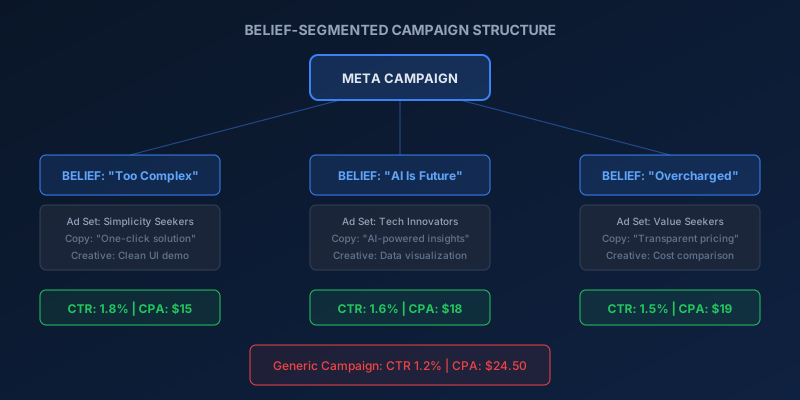
Standard Meta targeting groups people by demographics, interests, and behaviors. Belief-based targeting adds another layer. Create separate ad sets for each major belief segment, with creative and copy tailored to confirm that specific belief.
For example, if you sell project management software, one audience segment believes their current tool is too complex, while another believes they need better team collaboration. These are different beliefs requiring different confirmation messages, even though both audiences might share the same demographic profile.
- Identify 3-5 core belief segments from customer research
- Create dedicated ad sets for each belief segment
- Write headline and body copy that validates the specific belief
- Use creative that visually confirms the belief narrative
- Test belief-aligned ads against generic messaging to measure lift
- Scale winning belief segments with lookalike audiences
Stop wasting ad budget
NovaStorm AI cuts Meta Ads CPA by 40% on average. Start free.
Copywriting Frameworks That Leverage Confirmation Bias
The most effective framework for confirmation bias in ad targeting is what we call the Validate-Amplify-Solve structure. First, validate the belief the prospect already holds. Second, amplify the consequences of that belief being true. Third, present your product as the logical solution given that belief.
Consider this example for a fitness app targeting people who believe traditional gyms waste their time. Validate: "You already know 90-minute gym sessions are not the answer." Amplify: "Science confirms that focused 20-minute workouts deliver better results." Solve: "Our app gives you research-backed micro-workouts that fit your schedule."
The validation statement is the most critical element. When prospects read something they already believe, their guard drops. Test multiple validation angles for each belief segment — the one that resonates most will dramatically outperform generic benefit statements.
Performance Data: Belief-Aligned vs Generic Targeting
Campaigns structured around confirmation bias in ad targeting consistently outperform generic approaches across every major metric. The performance gap is especially pronounced in competitive markets where audiences are saturated with advertising messages.
| Metric | Generic Targeting | Belief-Aligned Targeting | Improvement |
|---|---|---|---|
| CTR | 1.2% | 1.62% | +35% |
| CPA | $24.50 | $17.15 | -30% |
| Conversion Rate | 3.8% | 5.32% | +40% |
| Ad Relevance Score | 6/10 | 8.5/10 | +42% |
| ROAS | 3.2x | 4.8x | +50% |
These numbers come from aggregated campaign data across e-commerce, SaaS, and service-based businesses. The improvements are consistent because confirmation bias operates at a fundamental psychological level that transcends industry verticals.
Ethical Guardrails for Confirmation-Based Advertising
There is a line between aligning with beliefs and exploiting them. Ethical confirmation bias in ad targeting means validating beliefs that are accurate or at least defensible. It does not mean reinforcing harmful misconceptions to drive sales.
Establish clear boundaries for your team. The product must genuinely deliver on the belief-aligned promise. If you tell someone their instinct about needing simpler tools is correct, your product must actually be simpler. Confirmation bias drives the click, but product reality drives retention.
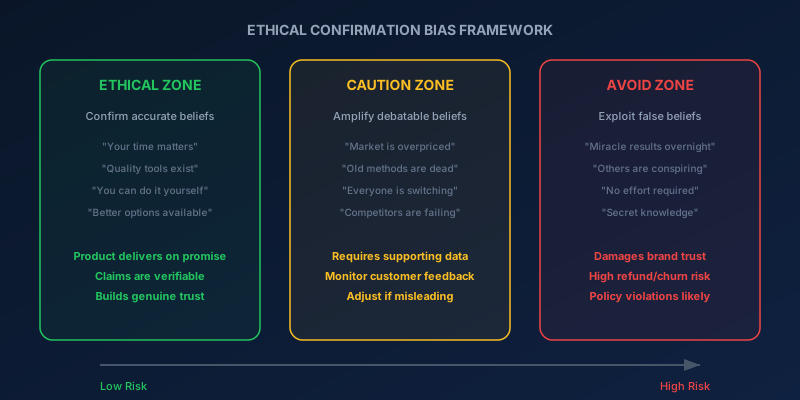
- Only confirm beliefs your product can genuinely support
- Avoid reinforcing harmful stereotypes or misinformation
- Back confirmation statements with verifiable data when possible
- Monitor customer satisfaction to ensure belief-aligned promises match reality
- Disclose product limitations honestly in post-click experience
Confirmation bias in ad targeting is one of the most reliable ways to improve Meta Ads performance because it works with human psychology rather than against it. Start by mapping your audience beliefs, create segmented campaigns that validate those beliefs, and measure the difference. When your advertising message feels like something the prospect already knows to be true, conversion becomes the natural next step.
Novastorm AI automates Meta Ads routine — from monitoring to optimization. Learn more at novastorm.ai
Disclaimer: This article was generated with the assistance of AI and reviewed by the NovaStorm AI team. While we strive for accuracy, we recommend verifying specific data points and consulting official sources (linked where available) for critical business decisions.
Ready to automate your Meta Ads?
NovaStorm AI takes full responsibility for your campaigns — from monitoring to optimization.
Get Started FreeRelated Articles
The End of Detailed Targeting Exclusions: What It Means for Advertisers
Meta is removing detailed targeting exclusions from Ads Manager. Learn what this change means for your campaigns and how to adapt your audience strategy.
The IKEA Effect: How Co-Creation Increases Product Value in Ads
Apply the IKEA effect to Meta Ads by letting users co-create their experience. Learn how participation-driven ads increase perceived value and conversions by 63%.
Herd Mentality in Meta Ads: Using Crowd Behavior to Boost Conversions
Leverage herd mentality in Meta Ads to boost conversions. Learn how crowd behavior, social proof, and bandwagon tactics increase CTR by 43% and drive action.