Product-Led Growth and Meta Ads: Self-Service Signup Campaigns
Combine product-led growth with Meta Ads to drive self-service signups at scale. Learn campaign structures, creative tactics, and funnel optimization for PLG.
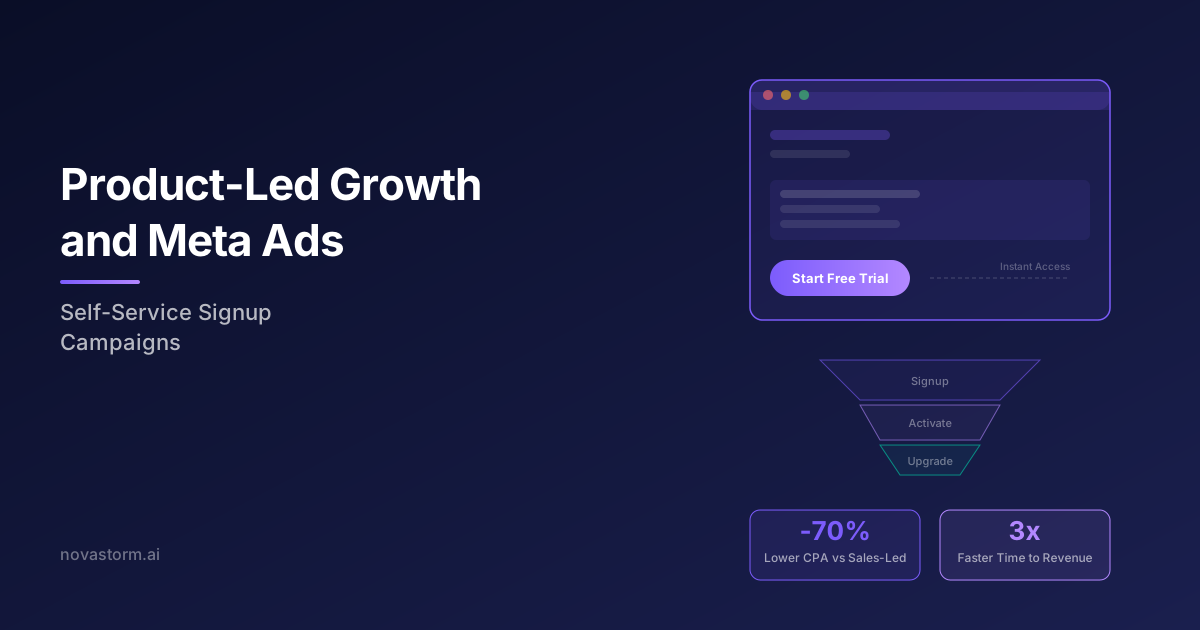
Product-led growth and Meta Ads form a powerful combination when your product sells itself through direct user experience. Instead of funneling prospects through sales calls and demo requests, PLG campaigns on Meta drive users straight into a free trial or freemium product where the value becomes self-evident. This approach slashes customer acquisition costs while dramatically increasing signup velocity.
Why Product-Led Growth and Meta Ads Work Together
Traditional SaaS advertising follows a sales-led model: generate a lead, nurture with content, schedule a demo, close the deal. This works for enterprise products but creates unnecessary friction for tools that users can adopt independently. Product-led growth eliminates this friction by letting the product do the selling.
Meta Ads excel in this model because they reach users in a context where quick, impulsive actions are natural. Nobody schedules a demo from a Facebook feed. But they will start a free trial if the ad makes the product's value immediately obvious. The alignment between Meta's low-friction interaction model and PLG's self-service ethos creates a natural conversion path.
| Model | Meta Ad CTA | Conversion Path | Typical CPA | Time to Revenue |
|---|---|---|---|---|
| Sales-Led | Book a Demo | Ad → Form → SDR Call → Demo → Close | $150-400 | 30-90 days |
| PLG Free Trial | Start Free Trial | Ad → Signup → Product → Upgrade | $15-50 | 7-30 days |
| PLG Freemium | Get Started Free | Ad → Signup → Product → Hit Limit → Upgrade | $5-25 | 14-60 days |
| PLG + Assist | Try It Now | Ad → Signup → Product → In-App Sales | $30-80 | 14-45 days |
Campaign Architecture for Self-Service Signups
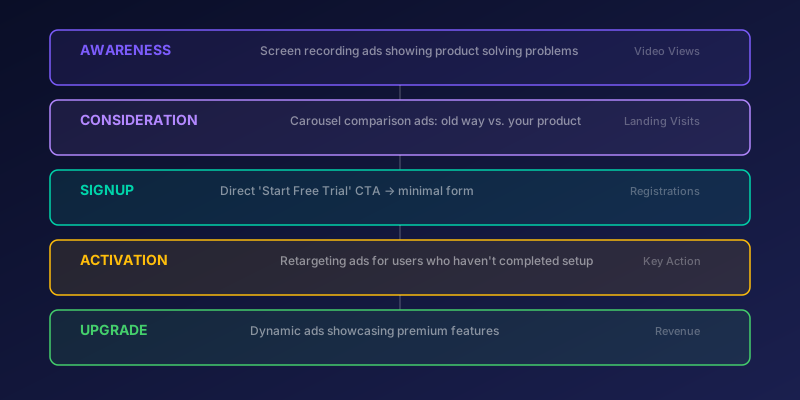
PLG campaigns on Meta require a specific architecture that mirrors the product-led funnel. The top of the funnel focuses on demonstrating the product in action rather than explaining its features. The middle of the funnel retargets visitors who saw the product but did not sign up. The bottom of the funnel re-engages free users who have not yet upgraded.
- Awareness: Screen recording ads showing the product solving a specific problem in under 30 seconds.
- Consideration: Carousel ads comparing your product's workflow to the painful alternative.
- Signup: Conversion-optimized ads with a direct 'Start Free Trial' CTA and minimal form fields.
- Activation: Retargeting ads for signed-up users who have not completed onboarding.
- Upgrade: Dynamic ads showing premium features relevant to the user's usage pattern.
The critical difference from traditional campaigns is that the product itself is the content. Every ad should show the product in use, not a stock photo of a happy business person. Screen recordings, product walkthroughs, and before-and-after workflow comparisons outperform abstract value propositions by significant margins.
Record your product screen with a voiceover that narrates the user's problem and solution in real time. These 'product demo' ads consistently achieve two to three times the click-through rate of traditional creative because they show exactly what the user will get after signing up.
Creative Strategy: Show the Product, Not the Promise
The golden rule of PLG advertising is to show, not tell. Your creative should let users experience the product vicariously before they ever sign up. This means screen recordings, animated product walkthroughs, interactive demos, and split-screen comparisons between the old way and your product's way.
The most effective PLG ad format on Meta is a 15 to 30 second video that follows a tight structure: three seconds on the problem, fifteen seconds showing the product solving it, and five seconds on the CTA. The product must be the star. Branding, testimonials, and features lists are supporting actors at best.
| Creative Type | Best For | CTR Benchmark | Signup Rate |
|---|---|---|---|
| Screen Recording | Complex tools | 1.8-2.5% | 12-18% |
| Animated Walkthrough | Visual products | 1.5-2.2% | 10-15% |
| Before/After Split | Workflow improvement | 2.0-3.0% | 14-20% |
| User Testimonial + Screen | Trust building | 1.2-1.8% | 8-12% |
| Interactive Demo Link | High-intent audiences | 0.8-1.2% | 20-30% |
Stop wasting ad budget
NovaStorm AI cuts Meta Ads CPA by 40% on average. Start free.
Optimizing the Signup Experience for Meta Traffic
Meta traffic arrives with high intent but low patience. Users who click your ad from their feed expect instant gratification. If your signup flow takes more than 30 seconds or requires more than three fields, you will lose the majority of your traffic.
The ideal PLG signup flow from Meta has three characteristics. First, it requires only an email address or offers single sign-on via Google or Apple. Second, it drops the user directly into the product rather than a welcome screen or onboarding wizard. Third, it delivers a moment of value within the first 60 seconds of use.
- Reduce form fields to the absolute minimum: email only or SSO.
- Skip the welcome tour; drop users into a pre-loaded workspace.
- Use progressive profiling to collect additional information over time.
- Pre-populate the product with sample data so users see value instantly.
- Trigger a success moment within 60 seconds of first login.
- Remove credit card requirements for free trials to maximize activation.
Measuring PLG Campaign Success Beyond Signups
Signups are a vanity metric in PLG. What matters is activation, the moment when a user experiences enough value to become a retained user. Track the activation rate of users acquired through Meta Ads and compare it to organic signups. If Meta traffic activates at a lower rate, your ad creative is setting inaccurate expectations.
Build a measurement framework that tracks the full journey from ad click to paid subscription. Pass Meta's click identifier through signup and attach it to the user record in your product analytics. This creates a closed-loop attribution system that tells you exactly which ad creative, audience, and placement drives the most revenue, not just the most signups.

Do not optimize Meta campaigns for signup volume alone. A campaign that drives 1,000 signups with a 5% activation rate is worth less than a campaign that drives 300 signups with a 40% activation rate. Feed activation events back into Meta as conversion signals.
Scaling PLG Campaigns With Expansion Revenue Signals
The ultimate advantage of PLG is that product usage data feeds directly into your advertising strategy. Users who hit usage limits, try premium features during a trial, or invite team members are signaling expansion intent. Feed these events into Meta as custom conversions and build lookalike audiences from your highest-value upgraders.
This creates a virtuous cycle. Your product generates behavioral data. That data identifies your best customers. Meta finds more people like them. Those people sign up, use the product, and generate more data. Each cycle tightens the targeting and improves the economics.
Product-led growth and Meta Ads together eliminate the traditional conflict between scalable reach and qualified leads. When the product is the sales pitch and Meta is the distribution channel, every dollar of ad spend is evaluated not by leads generated but by revenue activated.
Novastorm AI automates Meta Ads routine — from monitoring to optimization. Learn more at novastorm.ai
Disclaimer: This article was generated with the assistance of AI and reviewed by the NovaStorm AI team. While we strive for accuracy, we recommend verifying specific data points and consulting official sources (linked where available) for critical business decisions.
Ready to automate your Meta Ads?
NovaStorm AI takes full responsibility for your campaigns — from monitoring to optimization.
Get Started FreeRelated Articles

Cloud Service Advertising on Meta: AWS and Azure Alternative Marketing
Discover how to advertise cloud services on Meta platforms. Strategies for marketing AWS and Azure alternatives, targeting cloud buyers, and scaling campaigns.
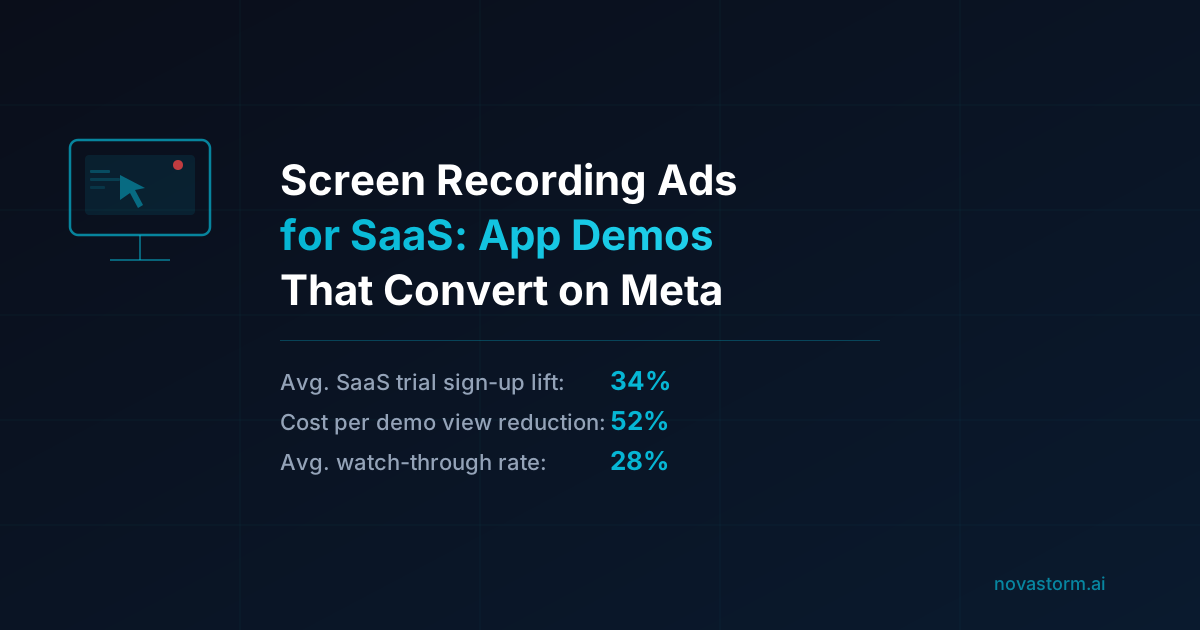
Screen Recording Ads for SaaS: App Demos That Convert on Meta
Create screen recording ads for SaaS that drive trial sign-ups on Meta. Learn the 30-second demo formula that lifts conversions by 34% with real app walkthroughs.
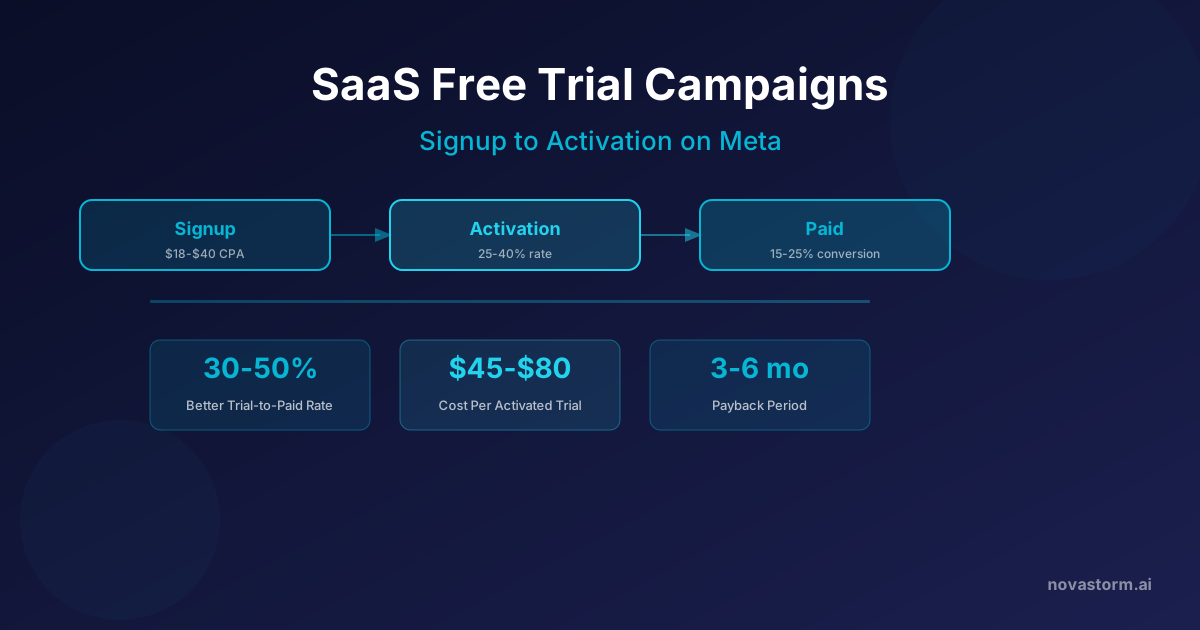
SaaS Free Trial Campaigns on Meta: Signup to Activation
Run SaaS free trial campaigns on Meta that drive signups at $18-$40 CPA and achieve 25-40% activation rates. Full-funnel optimization strategies for SaaS growth.