Price Comparison Ads on Meta: Positioning Against Competitors
Learn how to create effective price comparison ads on Meta that position your brand against competitors. Discover legal, creative, and strategic frameworks.
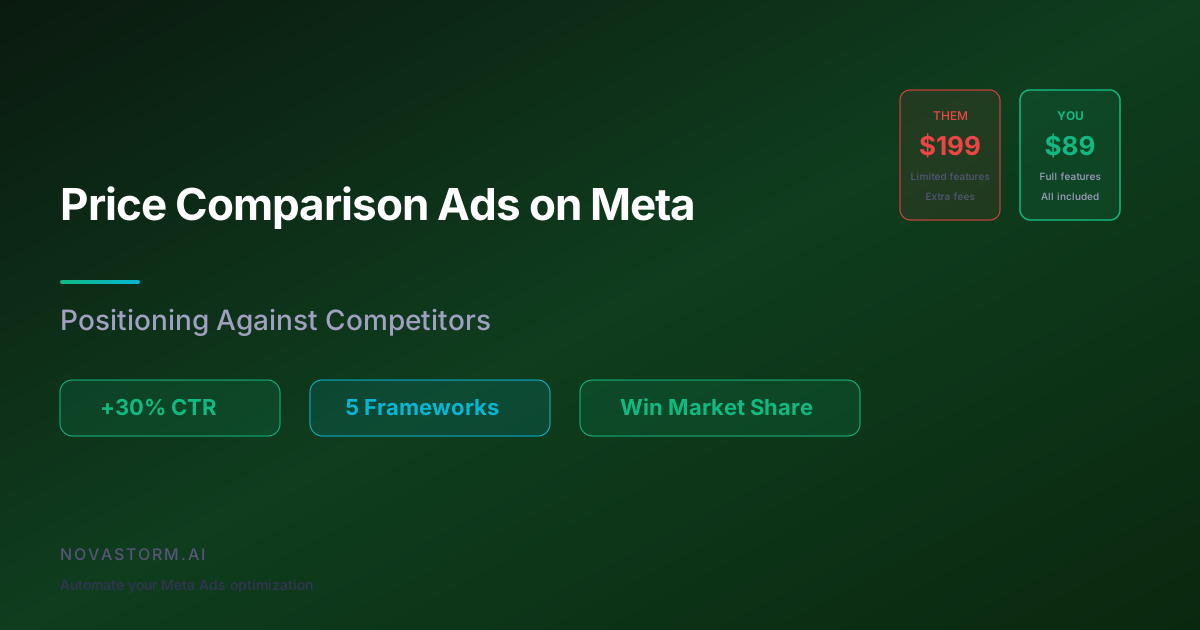
In competitive markets, customers already know your alternatives exist. Price comparison ads on Meta acknowledge this reality and turn it into an advantage. Rather than pretending competitors do not exist, comparison advertising frames your product as the smarter choice — often without naming anyone directly.
When executed strategically, price comparison ads on Meta can capture competitor audiences, improve click-through rates by 25-35%, and position your brand as the transparent, confident option in a crowded market.
Why Price Comparison Ads on Meta Work
Comparison advertising works because it shortens the buyer's research process. Instead of forcing them to open tabs, compare features, and calculate savings, your ad does the work for them. This reduces cognitive load and accelerates the decision.
Meta's targeting capabilities make comparison ads especially powerful. You can target users who follow competitor pages, have visited competitor websites (via custom audiences), or are actively researching your product category. The comparison message reaches people already in the decision phase.
Meta allows comparative advertising as long as claims are truthful, substantiated, and not misleading. You can reference competitor pricing without naming them — 'leading alternatives charge $200+' is safer than naming a specific brand.
Three Frameworks for Competitive Price Positioning
Not all price comparison ads on Meta take the same approach. Choose your framework based on your actual competitive advantage, market positioning, and risk tolerance.
| Framework | Approach | Risk Level | Best For |
|---|---|---|---|
| Direct comparison | Name the competitor, compare features and price | High — requires legal review | Clear superiority in price and features |
| Category comparison | Compare against 'industry average' or 'typical alternatives' | Low — no specific brand mentioned | Price advantage vs. multiple competitors |
| Value reframe | Show what your price includes vs. what others charge extra for | Low | When base prices are similar but value differs |
| TCO analysis | Compare total cost of ownership over time | Medium | Subscriptions, SaaS, ongoing-cost products |
| Switching savings | Calculate savings from switching to your product | Medium | Disrupting established market leaders |
Crafting Comparison Ad Creative That Converts
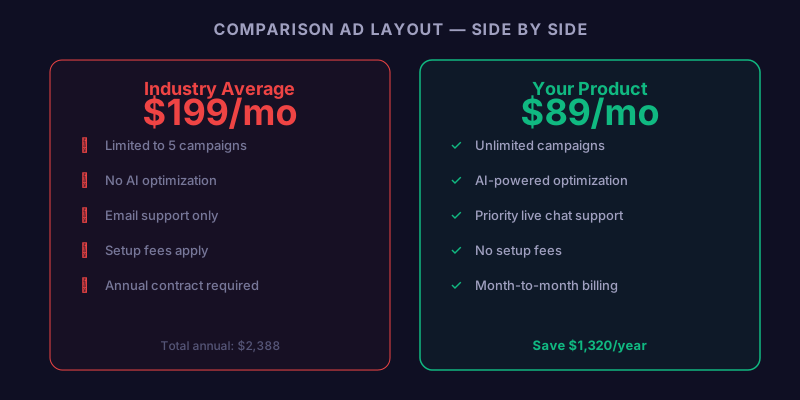
The creative format of price comparison ads on Meta must balance clarity with fairness. Side-by-side comparisons work best when the visual is clean, the data is accurate, and the conclusion is obvious.
Use a two-column layout in your image or carousel: your product on one side, the alternative on the other. Keep feature lists to 4-6 items maximum. Highlight price difference with contrasting colors. Green checkmarks and red X marks are universally understood and require zero explanation.
- Use a clean table or side-by-side format in the creative
- Limit comparison points to features your audience actually cares about
- Lead with the price difference — it should be the most prominent element
- Include a specific savings figure: 'Save $840/year' is stronger than 'Save money'
- Add a credibility element: source your data, link to third-party reviews
- Avoid negative language about competitors — let the comparison speak for itself
Legal and Policy Considerations for Comparison Ads
Stop wasting ad budget
NovaStorm AI cuts Meta Ads CPA by 40% on average. Start free.
Price comparison ads on Meta must comply with both Meta's advertising policies and local advertising laws. In the US, the FTC permits comparative advertising as long as claims are truthful. In the EU, the Comparative Advertising Directive sets stricter guidelines.
The safest approach is to compare against category averages or unnamed alternatives. If you do name a competitor, every claim must be verifiable with current data. Screenshots of competitor pricing, third-party review sites, or published rate cards serve as documentation.
| Practice | Status | Notes |
|---|---|---|
| Naming competitors with true claims | Allowed (with proof) | Must be verifiable and current |
| Saying 'cheaper than competitors' | Allowed if true | Keep price data updated |
| Using competitor logos | Generally not allowed | Trademark issues on Meta |
| Saying 'better than Brand X' | Risky | Subjective claims invite disputes |
| Referencing industry averages | Safest approach | No specific brand exposure |
| Showing competitor pricing screenshots | Proceed with caution | Prices change; data must be current |
Targeting Strategies for Competitor Audiences
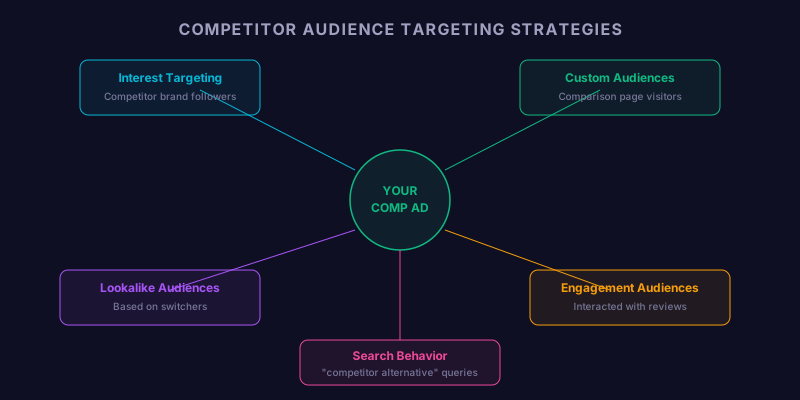
The most powerful aspect of price comparison ads on Meta is the ability to target people who are already considering alternatives. Meta offers several targeting approaches that put your comparison in front of competitor customers.
- Interest targeting: Target users interested in competitor brands or products
- Custom audiences: Retarget visitors from comparison or review pages on your site
- Lookalike audiences: Build lookalikes from customers who switched from competitors
- Engagement audiences: Target people who engaged with competitor-comparison content
- Search behavior: Target users researching '{competitor} vs' or '{competitor} alternative'
Measuring Comparison Ad Effectiveness
Price comparison ads on Meta require different success metrics than standard product ads. Beyond CTR and ROAS, track market share shifts, brand consideration lift, and the quality of acquired customers.
Customers acquired through comparison campaigns often have higher lifetime value because they made an informed, deliberate choice. They researched, compared, and chose you — which correlates with lower churn and higher satisfaction.
Run a brand lift study alongside your comparison campaign. Meta's built-in brand lift tools can measure whether your ads are shifting consideration away from competitors — a metric that ROAS alone cannot capture.
Price comparison ads on Meta are not about attacking competitors. They are about empowering customers with the information they need to make a confident decision. When you present a fair, honest comparison that highlights your strengths, you build trust that extends far beyond the initial click.
Novastorm AI automates Meta Ads routine — from monitoring to optimization. Learn more at novastorm.ai
Disclaimer: This article was generated with the assistance of AI and reviewed by the NovaStorm AI team. While we strive for accuracy, we recommend verifying specific data points and consulting official sources (linked where available) for critical business decisions.
Ready to automate your Meta Ads?
NovaStorm AI takes full responsibility for your campaigns — from monitoring to optimization.
Get Started FreeRelated Articles

Competitive Intelligence for Meta Ads: Monitoring Rival Campaigns
Master competitive intelligence for Meta Ads with proven frameworks for monitoring rival campaigns. Learn systematic approaches to track competitor ad spend, creative, and targeting.
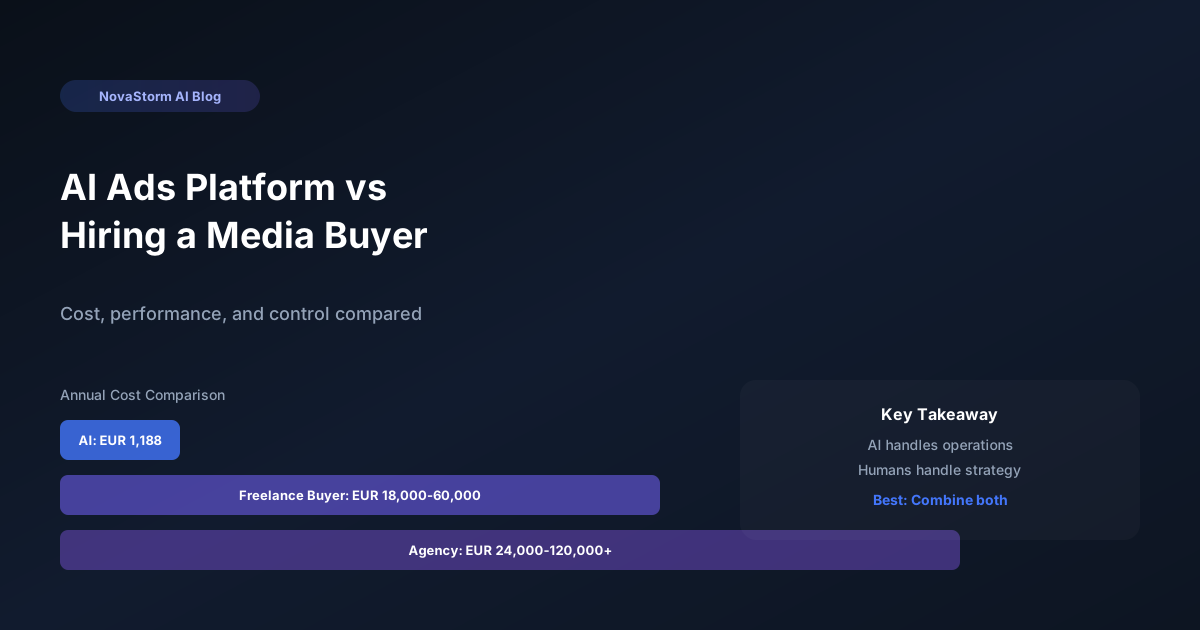
AI Ads Platform vs Hiring a Media Buyer: Cost, Performance, and Control Compared
Should you hire a media buyer or use an AI platform for Meta Ads? Comparing costs, performance, control, and scalability to help you decide.

AI Automation vs Manual Meta Ads Management: Which Approach Wins?
Comparing AI-automated Meta Ads management against manual approaches. See where automation excels, where human oversight matters, and how to combine both.