The Pratfall Effect: How Showing Flaws Builds Trust in Meta Ads
Discover the pratfall effect in Meta ads — how strategically showing flaws builds trust and boosts conversions. Psychology-driven advertising that works.
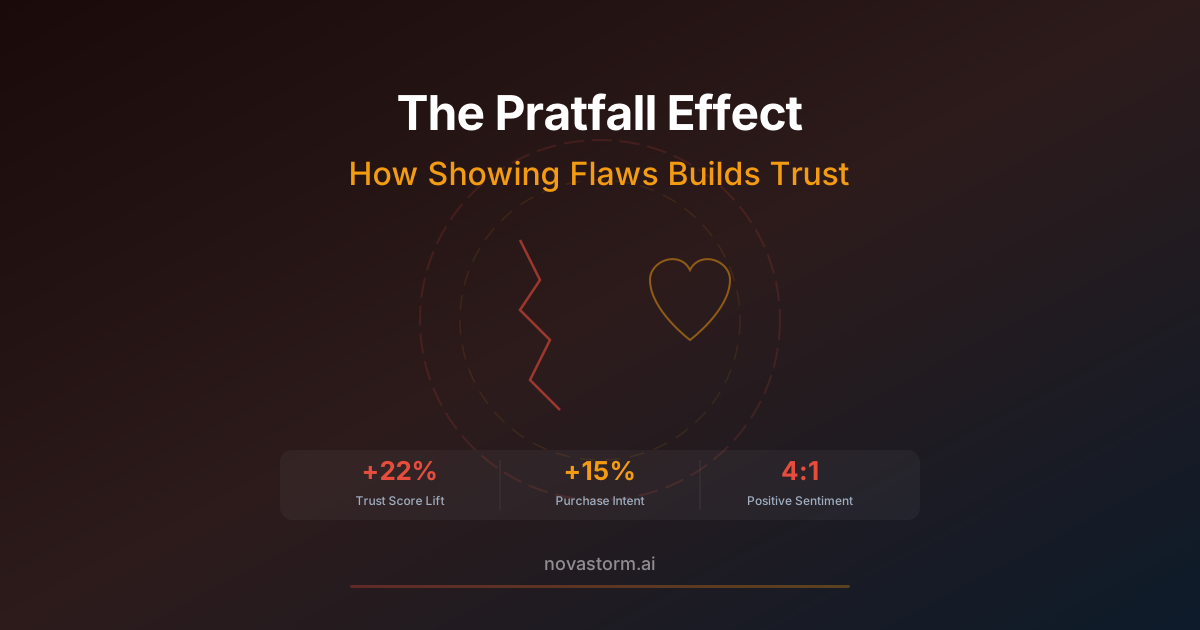
In 1966, psychologist Elliot Aronson conducted a now-famous experiment. Participants listened to recordings of two quiz show contestants — one who answered nearly every question correctly and one who performed averagely. When the high performer accidentally spilled coffee on himself, his likability ratings actually increased. The average performer who spilled coffee? His ratings dropped. This is the pratfall effect, and it has profound implications for how you should approach the pratfall effect in Meta ads.
The principle is simple but counterintuitive: when a competent entity reveals a minor flaw, it becomes more relatable and trustworthy. Perfection creates distance. Imperfection, handled correctly, creates connection. For brands competing in the hyper-polished world of social media advertising, this is a strategic advantage hiding in plain sight.
Why Perfection Is Killing Your Ad Performance
Modern consumers have developed sophisticated defense mechanisms against advertising. They have been trained by a decade of influencer culture, photoshopped imagery, and too-good-to-be-true promises. The result is a deep, reflexive skepticism toward any brand that presents itself as flawless.
When your Meta ads show a perfect product in a perfect setting with a perfect model delivering a perfect message, the audience's internal alarm system activates. Something feels off. Not because the ad is bad, but because it is too good. The pratfall effect in Meta ads works by deliberately disarming this skepticism.
Research Finding: A study in the Journal of Marketing found that brands admitting weaknesses in their advertising saw a 22% increase in trust scores and a 15% lift in purchase intent compared to brands presenting only strengths.
The Science Behind Strategic Vulnerability
The pratfall effect in Meta ads works through several cognitive mechanisms working in concert. Understanding these mechanisms helps you apply the principle correctly instead of accidentally undermining your brand.
| Mechanism | How It Works | Ad Application |
|---|---|---|
| Similarity bias | Flaws make brands feel more human and relatable | Behind-the-scenes content showing real struggles |
| Cognitive ease | Honest messaging requires less mental effort to process | Simple admissions like 'We're not the cheapest' |
| Expectation violation | Unexpected honesty creates memorable moments | Opening with what you do NOT do |
| Reciprocity | Vulnerability invites reciprocal trust | Sharing genuine failures and what you learned |
| Distinctiveness | Honesty stands out in a sea of perfect claims | Positioning flaws as features |
Five Pratfall Strategies for Meta Ad Campaigns
Not all flaws are created equal. The pratfall effect in Meta ads requires strategic selection of which imperfections to reveal. The wrong flaw destroys credibility. The right flaw amplifies it.
1. The Honest Limitation
Acknowledge something your product does not do. Avis built an empire on 'We're number two, so we try harder.' This framing turns a limitation into a strength. In Meta ads, a headline like 'Our software won't replace your team — it just makes them unstoppable' admits a boundary while elevating the core value proposition.
2. The Unpolished Creative
User-generated content, iPhone-shot videos, and imperfect visuals consistently outperform polished studio creative on Meta. This is the pratfall effect at work in the creative format itself. Imperfect production values signal authenticity, and authenticity is the currency of social media.
3. The Negative Lead
Start your ad with what could go wrong or what your product is not. 'This is probably the worst mattress for people who like sleeping on rocks.' The negative lead disarms skepticism immediately because no one expects an ad to lead with a downside. Once the guard is down, the positive message lands with far greater impact.
Stop wasting ad budget
NovaStorm AI cuts Meta Ads CPA by 40% on average. Start free.
4. The Real Review
Instead of cherry-picking five-star reviews, feature four-star reviews that mention a minor drawback alongside overwhelming praise. '4 stars — the app is incredible but the onboarding took me 20 minutes.' This feels more credible than a hundred perfect scores.
5. The Origin Story
Share the messy, imperfect journey of how your product came to be. Failed prototypes, early customer complaints that led to improvements, pivots that almost sank the company. These narratives humanize the brand and leverage the pratfall effect in Meta ads through genuine storytelling.
When the Pratfall Effect Backfires
Aronson's original research contained a critical caveat: the pratfall effect only works for entities that have already established competence. The high-performing quiz contestant became more likable after spilling coffee. The average performer became less likable.
For the pratfall effect in Meta ads, this means you must first establish your brand's expertise, quality, or track record before revealing imperfections. A new brand with no social proof that leads with its weaknesses will simply convince people it is weak.
- Never reveal a flaw that directly undermines your core value proposition
- Ensure your brand has established competence before deploying pratfall messaging
- Avoid flaws that are deal-breakers for your target audience
- Do not overdo it — one or two strategic imperfections are enough
- Always pair the flaw with a strength that more than compensates
Measuring Trust-Based Ad Performance
Standard performance metrics like CTR and ROAS do not fully capture the trust-building impact of pratfall-based creative. You need supplementary metrics that measure audience sentiment and long-term brand health.
| Metric | What It Reveals | Target Benchmark |
|---|---|---|
| Comment sentiment ratio | Positive vs. negative audience reactions | >4:1 positive |
| Share rate | Content feels authentic enough to endorse | >2% of reach |
| Repeat purchase rate | Trust translates to loyalty | +15-25% vs. control |
| Brand search lift | Ads drive organic curiosity | +10-20% brand searches |
| Time on landing page | Engaged, trusting visitors | +30% vs. standard ads |
Building a Pratfall Testing Framework
Deploying the pratfall effect in Meta ads should follow a structured testing approach. Start with low-risk experiments and scale what works.
- Identify 3-5 minor flaws or limitations that your audience might discover anyway
- Craft ad variations that lead with each flaw paired with a compensating strength
- A/B test pratfall creative against your standard polished creative
- Measure both immediate performance (CTR, CPA) and sentiment metrics (comments, shares)
- Scale winning pratfall angles while monitoring for any brand perception risks
- Rotate pratfall themes quarterly to maintain authenticity — repeated vulnerability feels staged
The brands that win on Meta in the coming years will not be the ones that shout the loudest or polish the most. They will be the ones brave enough to be honest — strategically, thoughtfully honest. The pratfall effect is not about being imperfect. It is about being human in a feed full of perfection.
Implementing this approach at scale requires careful monitoring of audience sentiment across every creative variation, detecting which flaws resonate and which repel, and adjusting in real time. That level of granular creative intelligence is where automation transforms a good idea into a repeatable system.
Novastorm AI automates Meta Ads routine — from monitoring to optimization. Learn more at novastorm.ai
Disclaimer: This article was generated with the assistance of AI and reviewed by the NovaStorm AI team. While we strive for accuracy, we recommend verifying specific data points and consulting official sources (linked where available) for critical business decisions.
Ready to automate your Meta Ads?
NovaStorm AI takes full responsibility for your campaigns — from monitoring to optimization.
Get Started FreeRelated Articles
The Contrast Effect in Meta Ad Creative: Standing Out in the Feed
Learn how the contrast effect in Meta ad creative helps your ads stand out in crowded feeds. Proven psychology-backed strategies for higher CTR and engagement.
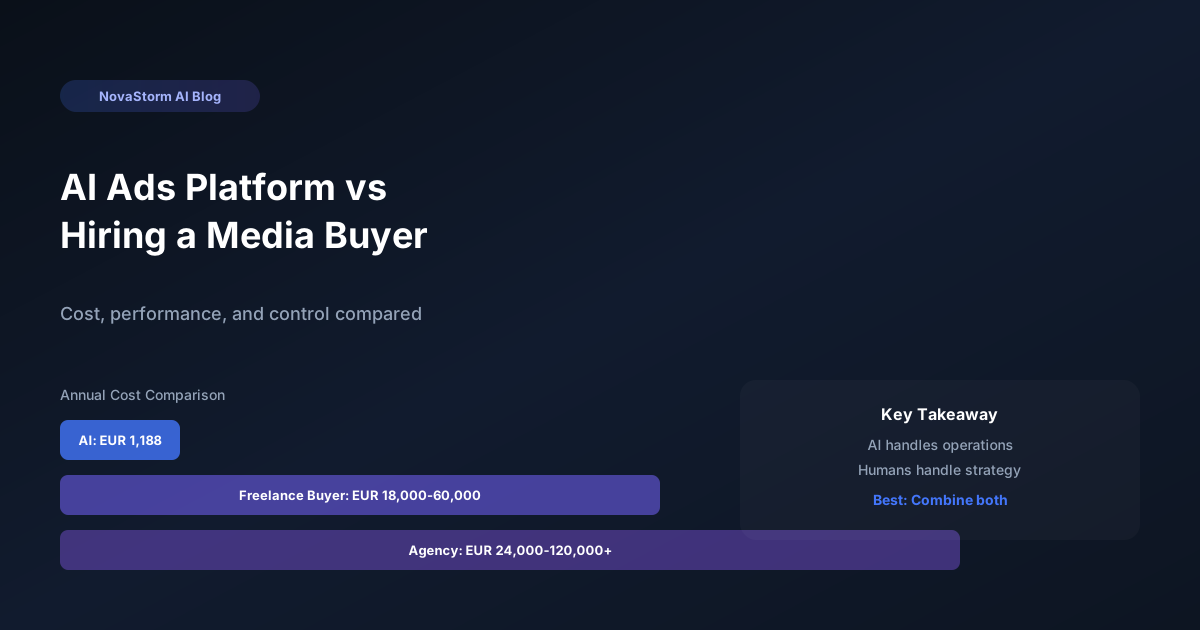
AI Ads Platform vs Hiring a Media Buyer: Cost, Performance, and Control Compared
Should you hire a media buyer or use an AI platform for Meta Ads? Comparing costs, performance, control, and scalability to help you decide.

AI Automation vs Manual Meta Ads Management: Which Approach Wins?
Comparing AI-automated Meta Ads management against manual approaches. See where automation excels, where human oversight matters, and how to combine both.