Podcast Content as Meta Ads: Audiogram and Clip Strategies
Turn podcast episodes into high-performing Meta Ads using audiograms and clip strategies. Learn formats, specs, and optimization tactics for podcast-to-ad conversion.
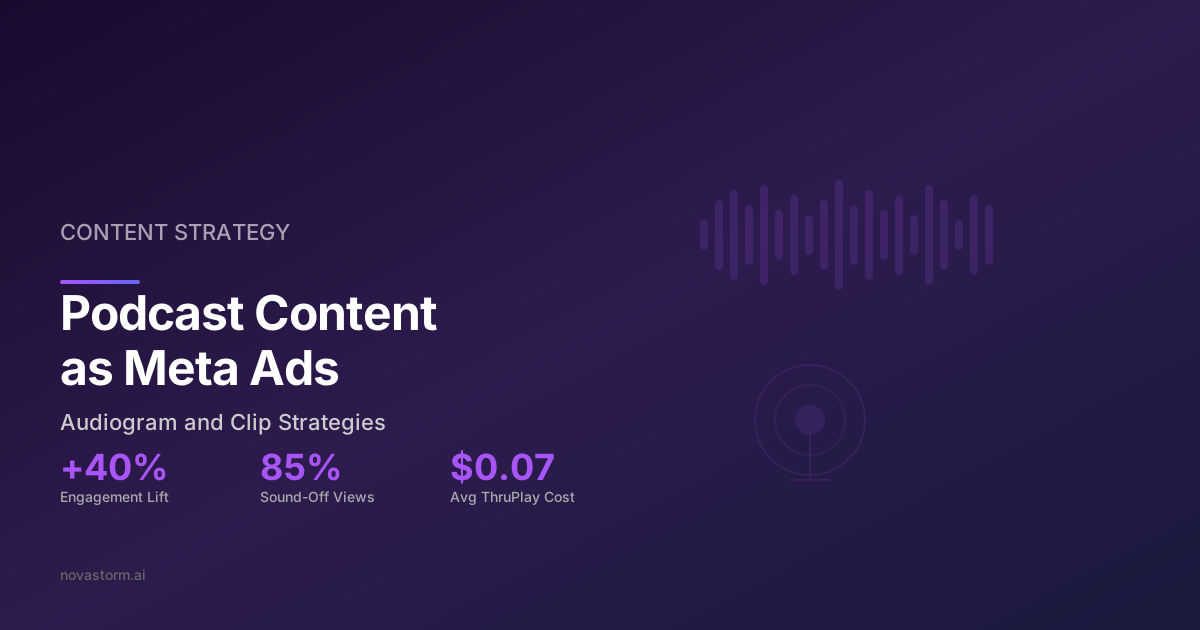
Podcasts are one of the most underutilized content assets in paid advertising. Brands invest heavily in producing episodes — booking guests, scripting conversations, editing audio — yet rarely extend that content into paid channels. Using podcast content as Meta Ads unlocks a high-authenticity, low-cost creative pipeline that most competitors completely ignore.
The opportunity is significant. Podcast listeners are among the most engaged digital audiences, with average listen-through rates exceeding 70%. When you bring that same authentic, conversational content into the Meta feed, it stands out against polished, studio-produced ads because it feels real. And real performs.
Why Podcast Content as Meta Ads Delivers Authentic Engagement
The Meta feed is saturated with highly produced creative. Users have developed pattern recognition for traditional ads and scroll past them reflexively. Podcast content as Meta Ads breaks this pattern because it looks and sounds different — conversational audio, genuine reactions, unscripted moments.
This authenticity translates directly into performance metrics. Audiogram-style ads consistently deliver 25-40% higher engagement rates compared to standard video ads. The conversational format builds trust faster, which is especially valuable for consideration-stage and retargeting campaigns.
| Metric | Standard Video Ad | Podcast Audiogram Ad |
|---|---|---|
| Avg. Engagement Rate | 1.8% | 2.9% |
| View-Through Rate (15s) | 22% | 34% |
| Cost Per ThruPlay | $0.12 | $0.07 |
| Comment Rate | 0.3% | 0.8% |
| Brand Recall Lift | +8% | +14% |
Audiogram Formats: Turning Audio Into Visual Ads
Audiograms are the foundation of podcast content as Meta Ads. They combine audio clips with visual elements — waveform animations, captions, speaker images, and branded frames — to create video content that works in a sound-off feed environment.
The Anatomy of a High-Performing Audiogram
- Duration: 30-60 seconds for feed, 15-20 seconds for Stories/Reels
- Captions: Large, high-contrast text synced to audio — critical for sound-off viewing
- Waveform animation: Provides visual movement that signals active audio content
- Speaker identification: Name, title, and headshot build credibility
- Branded frame: Subtle podcast artwork and brand colors maintain identity
- Hook text: First 3 seconds must feature a compelling statement or question
The most important element is captions. Over 85% of Meta feed content is consumed without sound. Your audiogram must work visually first, with audio as an enhancement rather than a requirement.
Clip Strategies: Selecting the Right Podcast Moments
Not every podcast moment makes a good ad. The selection process is where most brands fail — they either pick the host's favorite segment or simply use the introduction. Neither approach optimizes for ad performance.
Effective clip selection requires thinking like an editor for the feed, not for the podcast. You need moments that are self-contained, emotionally resonant, and immediately comprehensible without context.
The best podcast clips for ads share three characteristics: they start with a strong statement or surprising insight, they deliver a complete thought in under 60 seconds, and they end with an implicit or explicit call to curiosity — making the viewer want to hear more.
Five Clip Categories That Convert
| Clip Type | Description | Best Funnel Stage |
|---|---|---|
| Hot Take | Bold opinion or contrarian viewpoint | Awareness |
| Data Drop | Surprising statistic or research finding | Awareness |
| Story Moment | Personal anecdote with emotional arc | Consideration |
| Expert Tip | Actionable advice from guest expert | Consideration |
| Success Reveal | Client or guest sharing a breakthrough result | Decision |
Stop wasting ad budget
NovaStorm AI cuts Meta Ads CPA by 40% on average. Start free.
Technical Specs and Format Optimization
Using podcast content as Meta Ads requires adapting audio-first content to visual-first platforms. Each Meta placement has specific requirements that affect how your audiograms and clips should be produced.
| Placement | Aspect Ratio | Max Duration | Caption Style |
|---|---|---|---|
| Feed (Facebook) | 1:1 or 4:5 | 60 seconds | Bottom-center, large font |
| Feed (Instagram) | 1:1 or 4:5 | 60 seconds | Center or bottom, animated |
| Stories | 9:16 | 15 seconds | Full-screen overlay |
| Reels | 9:16 | 30 seconds | Dynamic, word-by-word |
| In-Stream | 16:9 | 15-30 seconds | Bottom third |
Produce each clip in at least two aspect ratios — square for feed placements and vertical for Stories and Reels. This doubles your placement options without requiring new content selection.
Building a Podcast-to-Ad Production Workflow
Efficiency depends on building a repeatable workflow that runs alongside your regular podcast production. The goal is to extract ad-ready clips as a natural byproduct of every episode, not as an afterthought.
- During editing, timestamp the top 5-8 potential ad moments per episode
- Export selected clips as standalone audio files (WAV or high-quality MP3)
- Generate captions using automated transcription — manually review for accuracy
- Create audiogram templates in 1:1 and 9:16 formats with your brand frame
- Render final audiograms with waveform animation and synced captions
- Upload to Meta Ads Manager with placement-specific customization
- Test 3-4 clip variations per episode in a dedicated podcast ad set
Teams that integrate clip selection into the editing process — rather than treating it as a separate task — produce 3x more ad variations per episode with minimal additional effort.
Optimization and Testing Strategies
Podcast content as Meta Ads follows different optimization patterns than traditional video ads. The key variables to test are clip selection, caption styling, opening hook, and thumbnail frame. Audio quality and speaker energy matter more than production polish.
- Test different clip moments from the same episode against each other
- Vary caption styles — static vs. animated, top vs. bottom placement
- A/B test hook frames: question text vs. bold quote vs. guest face
- Compare audiogram format against video-with-face format
- Monitor ThruPlay rate as your primary engagement signal
- Refresh clips every 2-3 weeks to combat creative fatigue
Measuring Podcast Ad Performance Beyond Clicks
Standard click-through metrics do not capture the full value of podcast content as Meta Ads. These ads excel at building brand awareness and trust — metrics that require broader measurement frameworks.
Track brand lift studies alongside direct response metrics. Monitor podcast download spikes that correlate with ad spend periods. Measure assisted conversions where podcast ads appear in multi-touch attribution paths. The true ROI often shows up in downstream metrics rather than last-click attribution.
Podcast content as Meta Ads represents one of the highest-leverage repurposing strategies available today. Every episode you produce contains multiple ad-worthy moments. The brands that systematically extract and deploy these moments gain a significant creative advantage — authentic content at scale, produced at a fraction of the cost of traditional video production.
Novastorm AI automates Meta Ads routine — from monitoring to optimization. Learn more at novastorm.ai
Disclaimer: This article was generated with the assistance of AI and reviewed by the NovaStorm AI team. While we strive for accuracy, we recommend verifying specific data points and consulting official sources (linked where available) for critical business decisions.
Ready to automate your Meta Ads?
NovaStorm AI takes full responsibility for your campaigns — from monitoring to optimization.
Get Started FreeRelated Articles
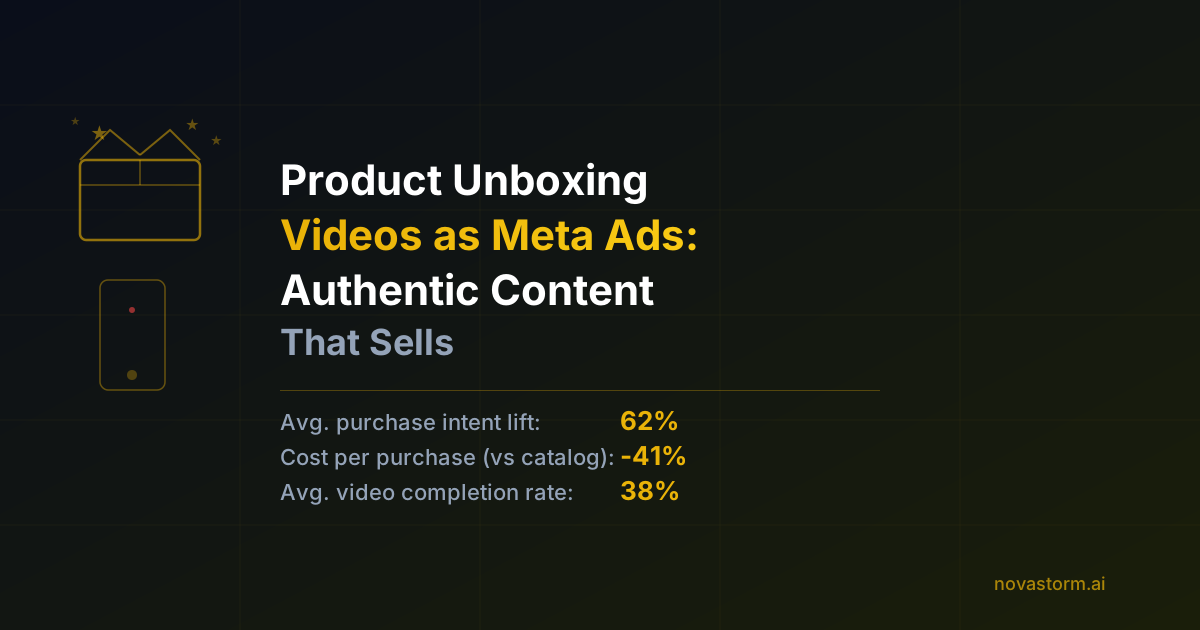
Product Unboxing Videos as Meta Ads: Authentic Content That Sells
Turn product unboxing videos into high-converting Meta Ads. Learn filming techniques, editing tips, and sourcing strategies that lift purchase intent by 62%.
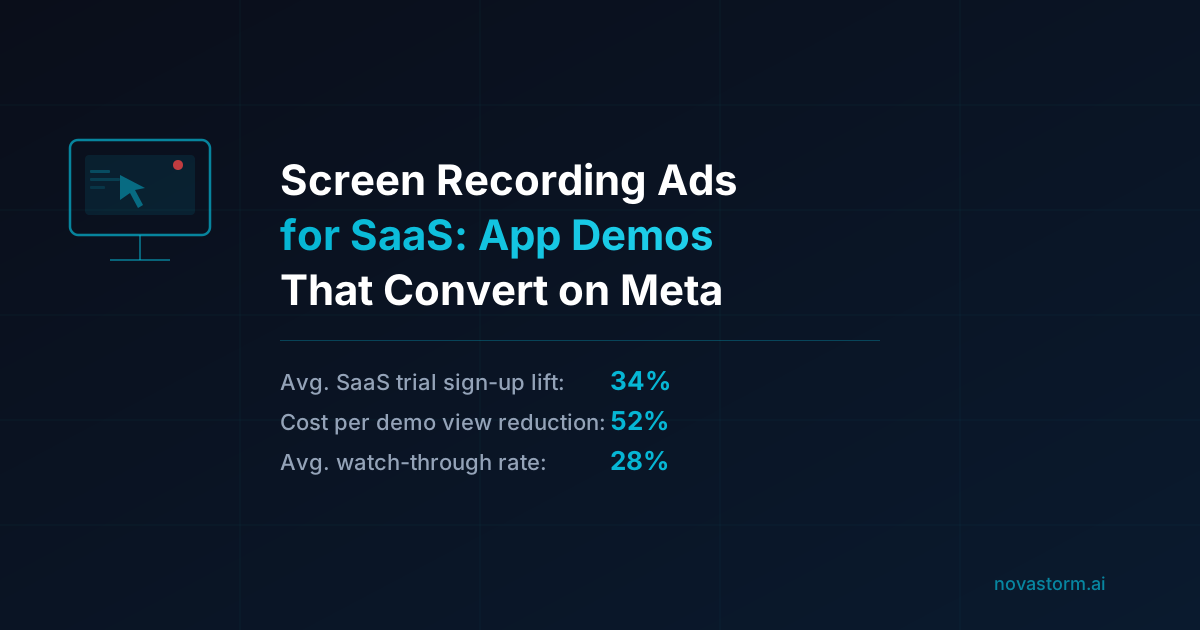
Screen Recording Ads for SaaS: App Demos That Convert on Meta
Create screen recording ads for SaaS that drive trial sign-ups on Meta. Learn the 30-second demo formula that lifts conversions by 34% with real app walkthroughs.
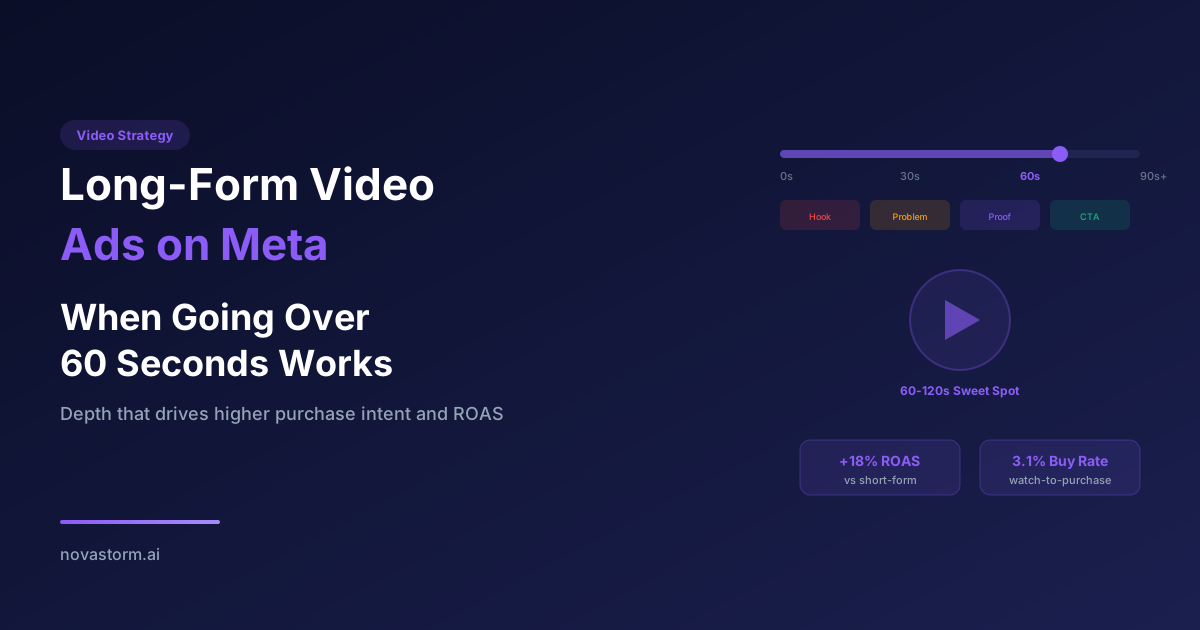
Long-Form Video Ads on Meta: When Going Over 60 Seconds Works
Long-form video ads on Meta can outperform short clips by 18% on ROAS when used correctly. Learn the exact scenarios, structures, and metrics that make 60s+ video work.