Market Gap Analysis Through Meta Ad Library Research
Discover untapped opportunities using market gap analysis through Meta Ad Library research. Find audience, messaging, and format gaps competitors are missing.

The highest-ROAS campaigns often do not come from outspending competitors or out-designing them. They come from finding opportunities no one else has noticed. Market gap analysis through Meta Ad Library research is the systematic process of identifying where competitor coverage falls short and audience demand remains unserved.
This guide walks you through a complete market gap analysis methodology using publicly available Meta Ad Library data. You will learn to spot five types of gaps, validate whether they represent real opportunities, and build campaigns that exploit them before competitors catch on.
What Market Gap Analysis Reveals in Meta Ads
Market gap analysis examines the difference between what competitors are doing in their advertising and what the market actually needs. In Meta Ads, these gaps manifest as underserved audiences, unexplored messaging angles, neglected ad formats, missing offer types, and unclaimed seasonal windows.
Research indicates that 47% of competitive markets on Meta have significant gaps in at least one of these dimensions. Advertisers who target validated gaps achieve an average 3.8x ROAS lift and 56% lower CPA compared to campaigns competing directly in saturated spaces.
Five Types of Market Gaps in Meta Advertising
Each type of market gap analysis opportunity requires a different research approach and exploitation strategy. Understanding all five ensures you conduct thorough competitive research.
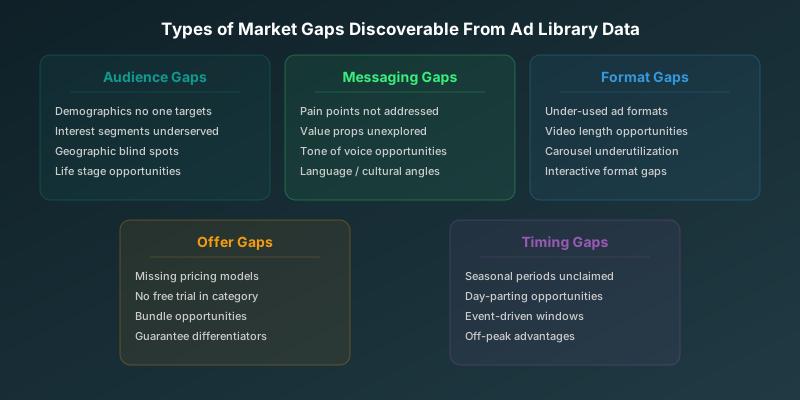
| Gap Type | How to Find It | Exploitation Strategy |
|---|---|---|
| Audience Gap | Compare competitor targeting signals against audience tools data | Create dedicated campaigns for neglected segments |
| Messaging Gap | Catalog all competitor value propositions and hooks | Test messaging angles no competitor has claimed |
| Format Gap | Track ad format distribution across competitors | Double down on underused formats with strong performance |
| Offer Gap | Map all competitor offers, discounts, and CTAs | Introduce offer types missing from the market |
| Timing Gap | Analyze competitor ad launch patterns by season and day | Advertise heavily during periods competitors go quiet |
The Market Gap Analysis Process
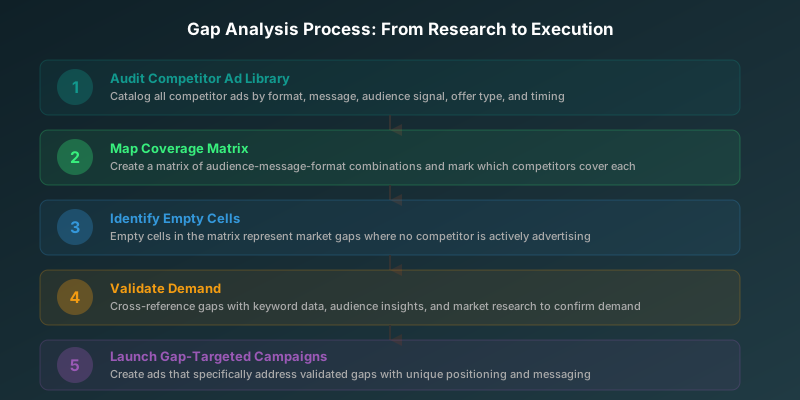
Effective market gap analysis follows a five-step process that transforms raw competitive data into validated campaign opportunities. Skipping steps leads to pursuing false gaps that either do not exist or do not represent real demand.
Step 1: Comprehensive Competitor Audit
Start by cataloging every active ad from your top 5 to 10 competitors in the Meta Ad Library. For each ad, record the creative format, primary messaging angle, apparent audience signal, offer type, CTA button, and how long it has been running.
Stop wasting ad budget
NovaStorm AI cuts Meta Ads CPA by 40% on average. Start free.
Step 2: Build the Coverage Matrix
Create a spreadsheet with audience segments on one axis and messaging angles on the other. Mark which competitors actively cover each combination. This visual representation makes gaps immediately obvious.
Step 3: Validate Demand for Identified Gaps
Not every gap is an opportunity. Some gaps exist because there is no demand. Cross-reference each identified gap with keyword search volume, audience size estimates from Meta's targeting tools, and any available market research. A valid gap has clear demand but insufficient competitive supply.
The most common mistake in market gap analysis is assuming every empty space is an opportunity. Always validate demand before investing in gap-targeted campaigns. Competitors may have already tested and abandoned that space for good reasons.
Real-World Market Gap Examples
To illustrate how market gap analysis works in practice, consider these common gaps found across various Meta Ads verticals.
- A skincare brand discovered no competitors targeted men over 40, despite strong audience data showing demand
- A SaaS company found that competitors used only static images, leaving video entirely unexplored in their niche
- An e-commerce brand noticed competitors never ran ads on weekends, creating a lower-CPM opportunity window
- A fitness brand identified that no competitor addressed post-injury recovery despite high search volume for the topic
- A home goods brand found no competitors offered monthly payment plans in their ads despite Afterpay market growth
Scaling Market Gap Analysis With AI
Manual market gap analysis is powerful but time-intensive. Auditing 10 competitors with 30 ads each means analyzing 300 individual data points, then cross-referencing against audience data and market research.
Novastorm AI automates the competitive audit phase of market gap analysis by continuously monitoring competitor ad portfolios and identifying patterns across dimensions that would take human analysts days to map. The AI flags emerging gaps as competitors shift strategies, giving you first-mover advantage on new opportunities.
Market gaps are not static. As competitors evolve their strategies, new gaps open and old ones close. Continuous market gap analysis through automated monitoring ensures you always know where the freshest opportunities lie.
Start your market gap analysis today by auditing your top five competitors in the Meta Ad Library. The gaps you discover may be the most valuable competitive insights you have ever found.
Novastorm AI automates Meta Ads routine — from monitoring to optimization. Learn more at novastorm.ai
Disclaimer: This article was generated with the assistance of AI and reviewed by the NovaStorm AI team. While we strive for accuracy, we recommend verifying specific data points and consulting official sources (linked where available) for critical business decisions.
Ready to automate your Meta Ads?
NovaStorm AI takes full responsibility for your campaigns — from monitoring to optimization.
Get Started FreeRelated Articles

Competitive SWOT Analysis for Meta Ads Strategy
Learn how to conduct a competitive SWOT analysis for Meta Ads strategy that reveals opportunities, neutralizes threats, and strengthens your ad positioning.
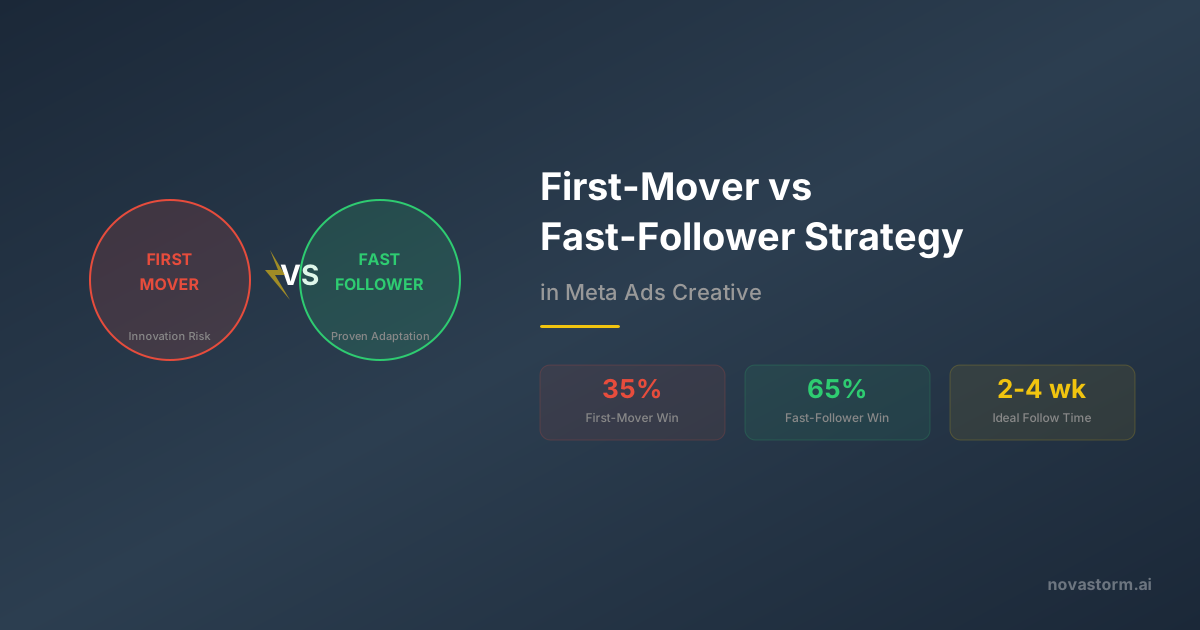
First-Mover vs Fast-Follower Strategy in Meta Ads Creative
Should you innovate or adapt in Meta Ads creative? Compare first-mover vs fast-follower strategies with data on win rates, timing, and when to use each approach.
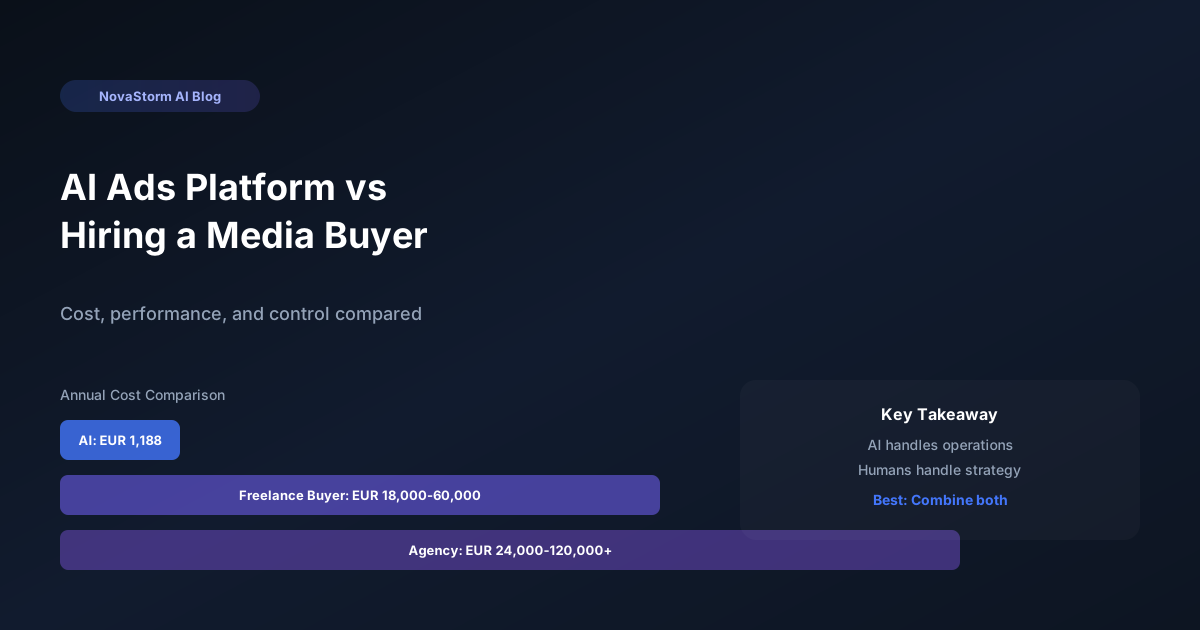
AI Ads Platform vs Hiring a Media Buyer: Cost, Performance, and Control Compared
Should you hire a media buyer or use an AI platform for Meta Ads? Comparing costs, performance, control, and scalability to help you decide.